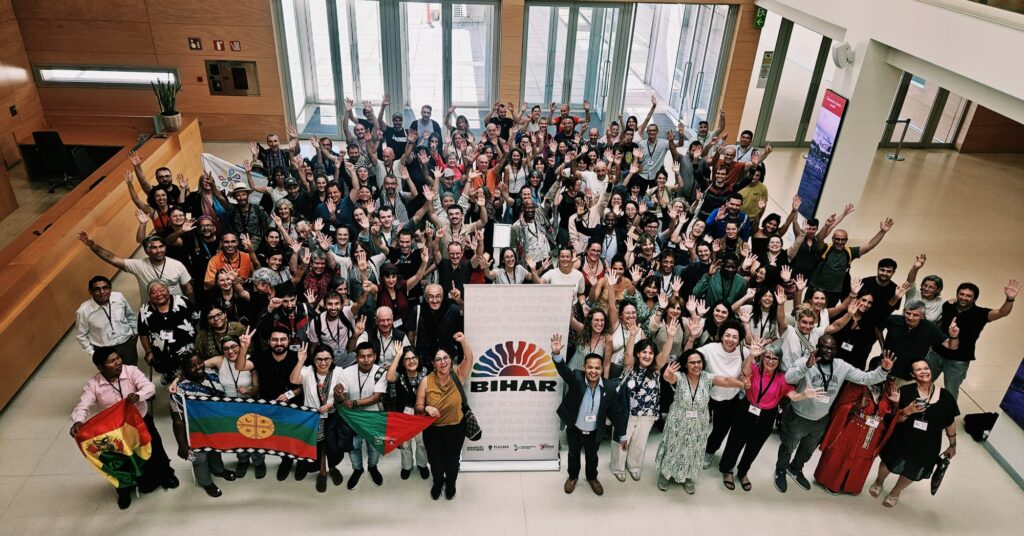
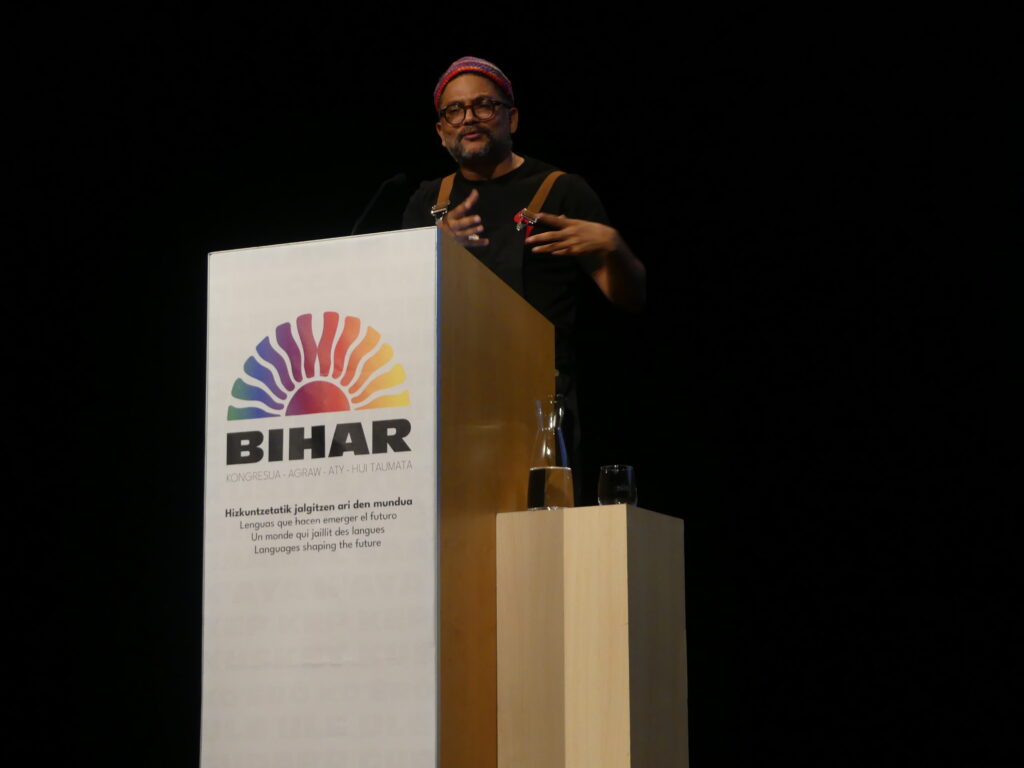
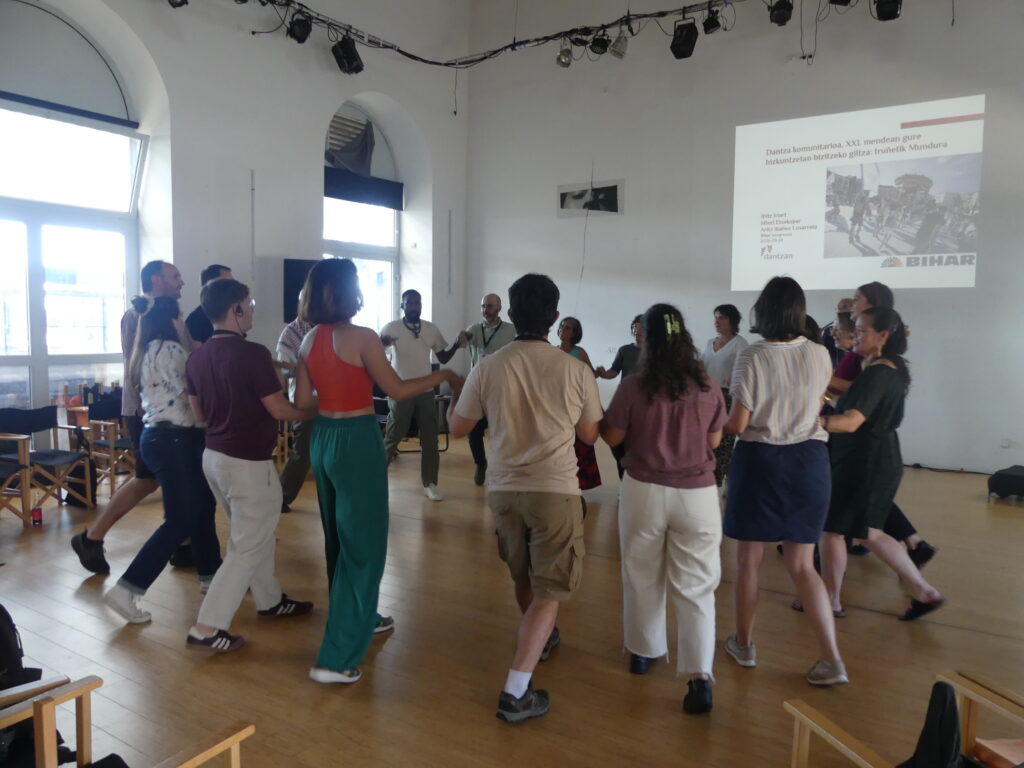
The importance of cooperation, a renewal of discourse and an intersectional approach to language revitalisation were among the key ideas highlighted today at Ficoba (Irun, the Basque Country) on the second day of the BIHAR international conference. Over the course of four days, around 40 language communities from across the world will take part in the conference.
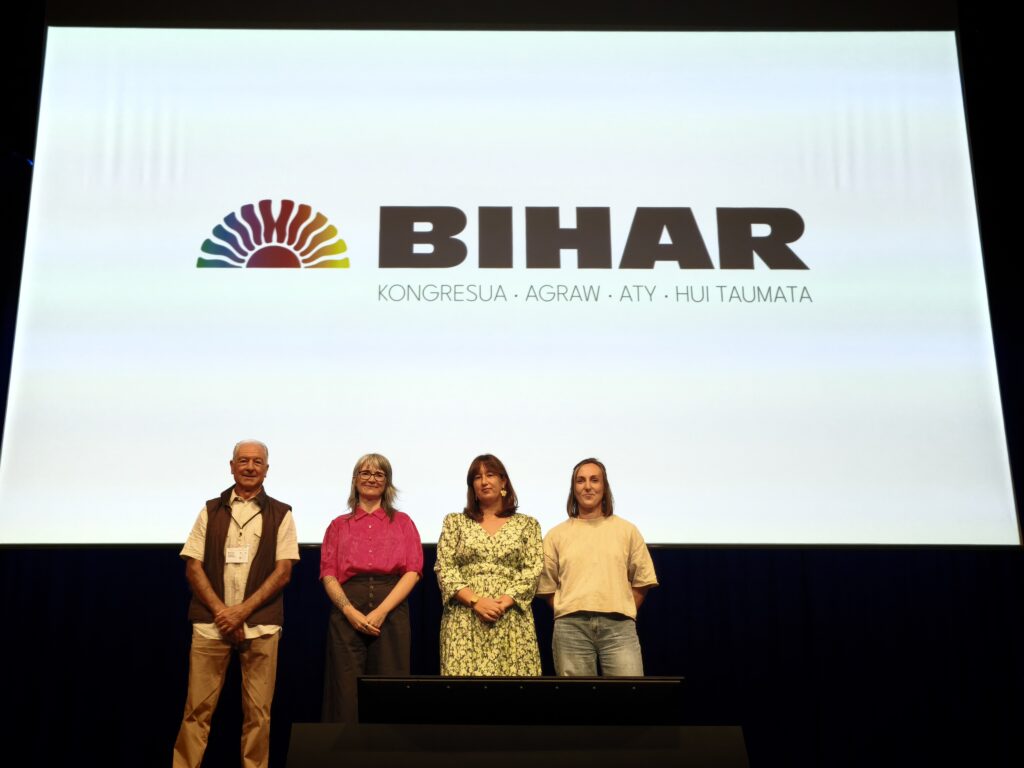
The opening remarks were delivered by the chairpersons of the four organisations behind the Congress: Iñaki Martínez de Luna (Garabide), Maite Asensio (Soziolinguistika Klusterra), Irati Iciar (Taupa Euskaltzaleen Mugimendua) and Ihintza Etchart (Plazara).
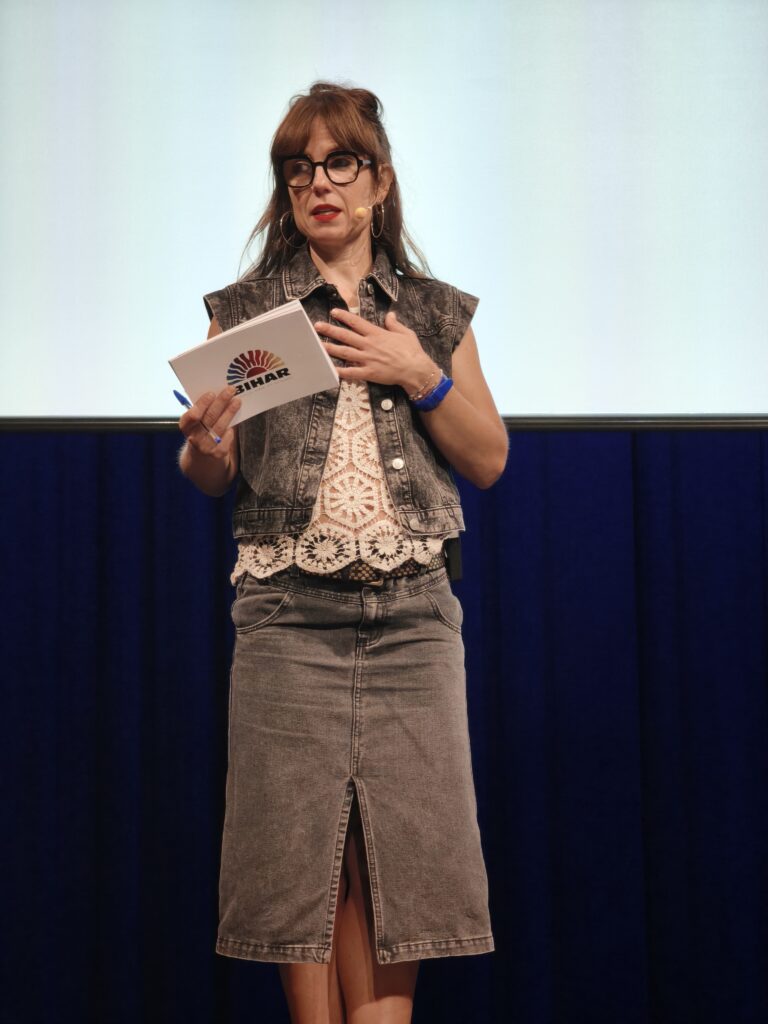
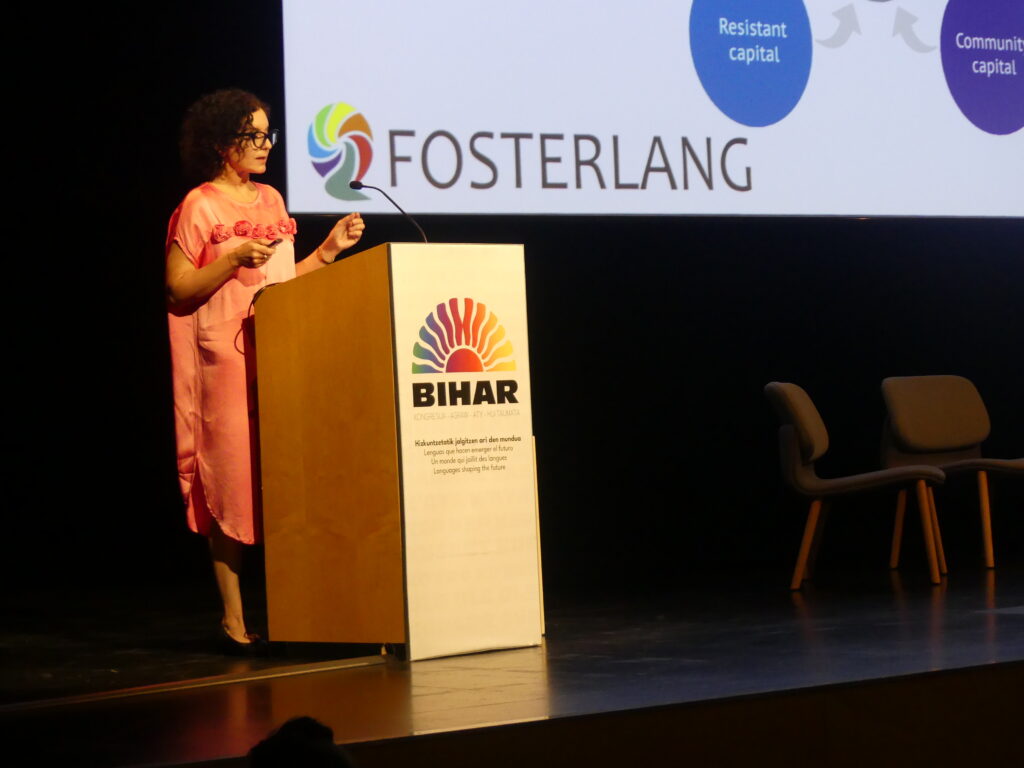
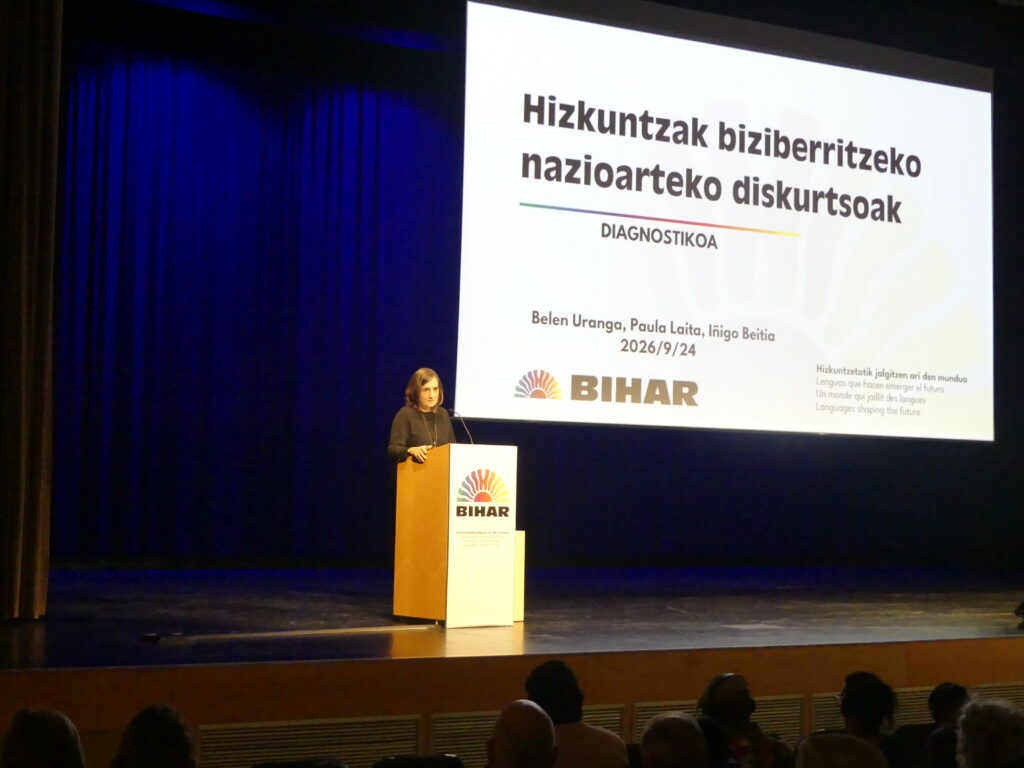
Next, language specialist and sociolinguistic researcher Belén Uranga, from Soziolinguistika Klusterra, outlined the details of the study that formed the first phase of the Bihar Congress. Her work involved completing an analysis of current international discourses on language revitalisation. “The aim was to identify the discourses used in language revitalisation processes. We haven’t focused on the language itself; we’ve focused on the reasons behind it. We’ve spoken to people actively involved in different communities”, she explained. She went on to detail the dimensions into which these discourses have been classified: symbolic-identity, political-transformative and pragmatic. And, amongst other things, regarding the first dimension, she explained that, in terms of identity, “there is a tendency to separate language from identity and to resort to pragmatism. We have been warned of the danger of this; it is not advisable to distinguish between them too sharply. On the other hand, collective memory cannot be imagined without the use of that community’s language.”
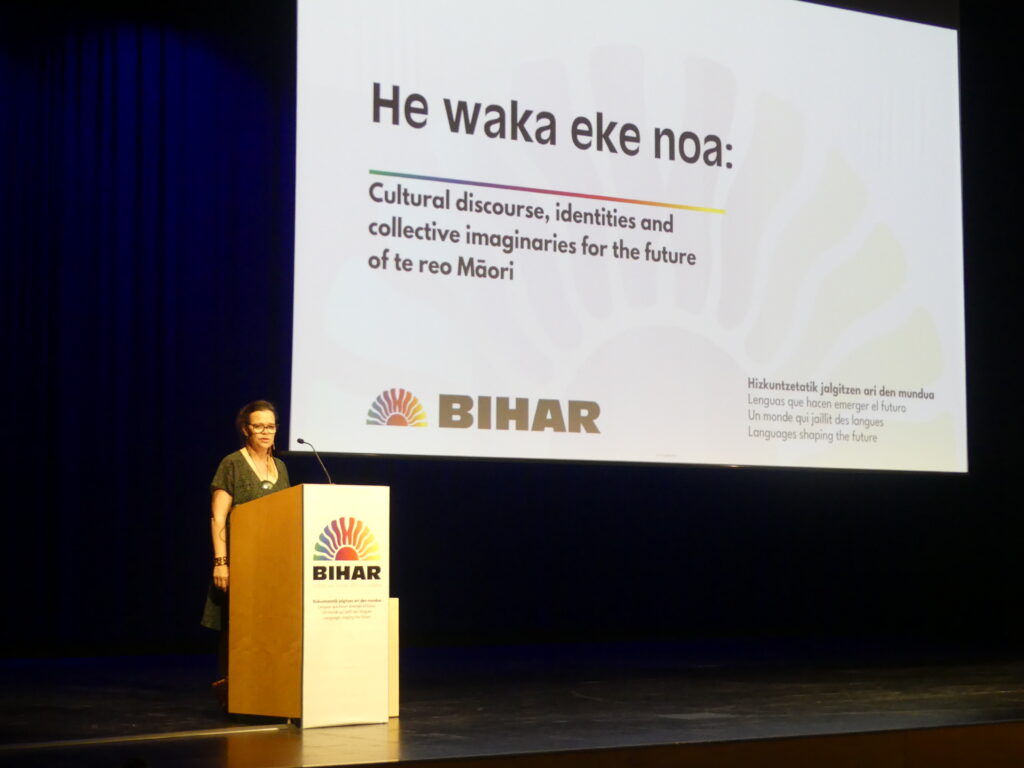
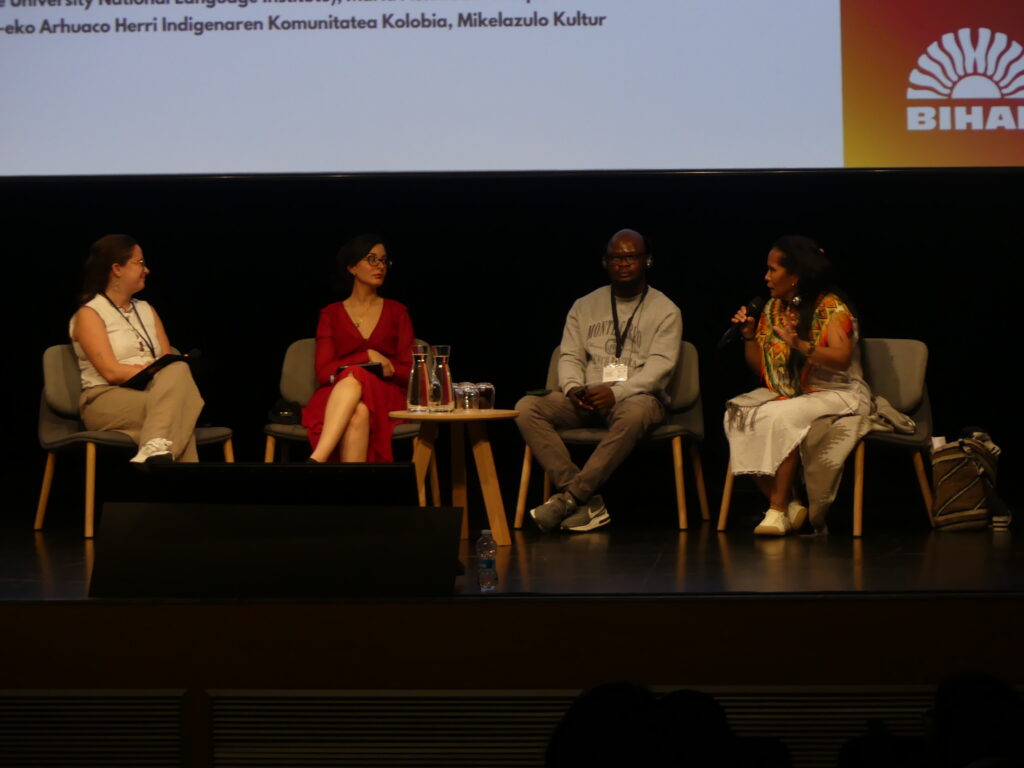
Rahera Cowie, a Te Reo Māori speaker from Aotearoa, addressed the cultural dimension and the sense of identity. “The most beautiful gift that Māori has given me has not been the language itself, but the values. We have different words to describe, for example, respect, looking after the land and one another, or how to clear the table after dinner. It is a way of discovering who we are and who we want to be.” Following years of bans, she highlighted the efforts currently being made to revitalise Māori. “There is a great deal of commitment from young people; half of the speakers are under 30 – it’s fantastic. They are passionate about it and understand that we are part of the world. The government aims to reach one million speakers by 2040; there is still a great deal of work to be done.”
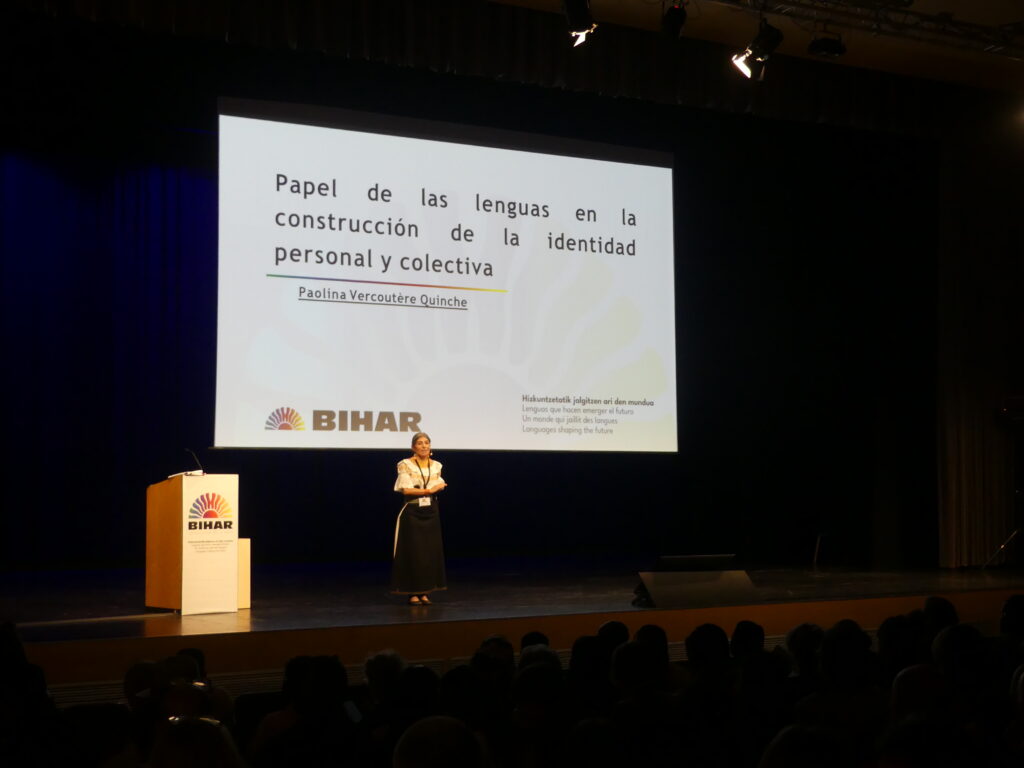
Paolina Vercoutere Quinche, a leader of the Kichwa-Otavalo community, has travelled from Ecuador; she served as governor and deputy prefect of Imbabura, is the founder of Warmi Imbabura, and is a leading advocate for the revitalisation of the language and culture. She spoke about language, identity and community knowledge, and explained that during a visit to the Basque Country she realised the need to revive her own language. “I took up a new cause here: I was already committed to women’s rights and the rights of indigenous peoples; it was here that I became aware of linguistic rights.” She combined these three struggles to shape her political agenda. “Language has been a tool in the fight against gender-based violence. A survey on femicides and assaults was published for the first time in two languages, and of the 2,500 questionnaires, half were completed in Kichwa.” She made it a requirement that all professionals working with women who have suffered violence must be proficient in two languages. “I have appointed Kichwa-speaking professionals as civil servants because the State must also be an instrument of social justice.”
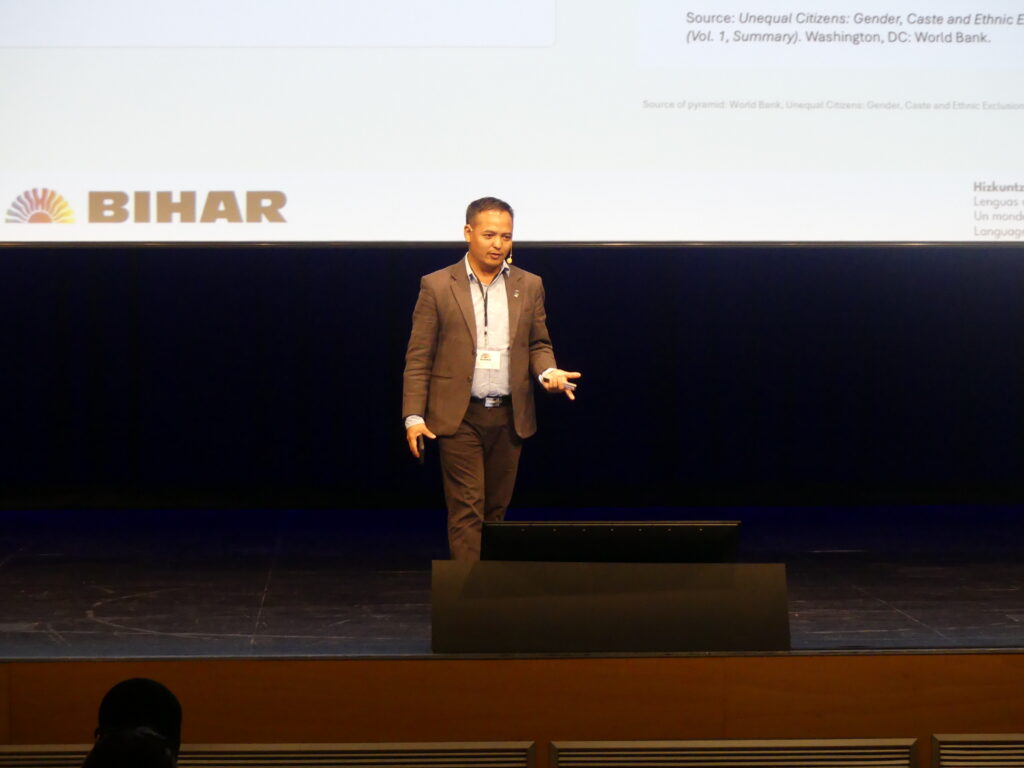
Nabraj Lama, from Nepal, representing the Tamang language, spoke on the themes of diversity, sustainability and ecological values. “I only spoke Tamang until I started school at the age of seven. It was a school where Nepali was spoken, and I didn’t understand a word; I wasn’t even able to ask to go to the toilet. The teachers didn’t understand me either. ’ He explains that today there is a huge gap in cultural transmission, as many people believe that English is the language of development. ‘But for me, it opened doors.’ Visibly moved, he recounted how many of the victims of this year’s floods spoke only Tamang. ‘The government issued alerts only in Nepali. Yet the severity of the event demanded that messages be broadcast in Tamang as well. This failure led to thousands of deaths due to a lack of communication. Everything has been lost: the people, the culture, the language… everything. ”
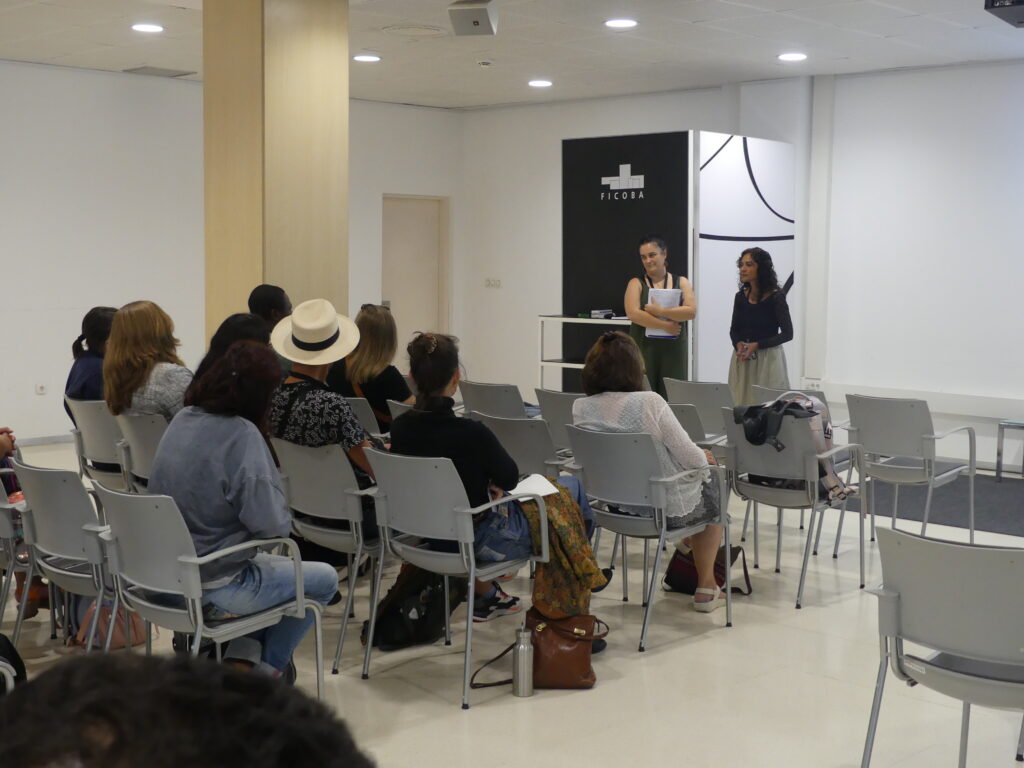
And to round off the morning, Irati Elizalde and Onintza Olaizola – respectively head of communications and outreach and head of the Herrigintza division within the Taupa euskaltzaleen mugimendua movement – explained how the findings of the assessment carried out by Soziolinguistika Klusterra had been disseminated, from an intersectional perspective across the whole of the Basque Country. Speaking about the meetings with stakeholders from various fields, Onintza Olaizola said: ‘Perhaps the most fruitful question arising from this process is not simply what new narrative the Basque language needs. Perhaps the question is also this: what social project are we proposing on the basis of the Basque language? Because new narratives will not be credible if we merely change the words. Talking about a more open community also requires us to review our practices. Talking about social justice requires us to address material inequalities. And calling for alliances requires us to be present in other struggles as well. This is where we see a fruitful area of action for the future: presenting the Basque language as a shared project rooted in diversity, equality, coexistence and the future of the community.”
Language, but also health and wellbeing
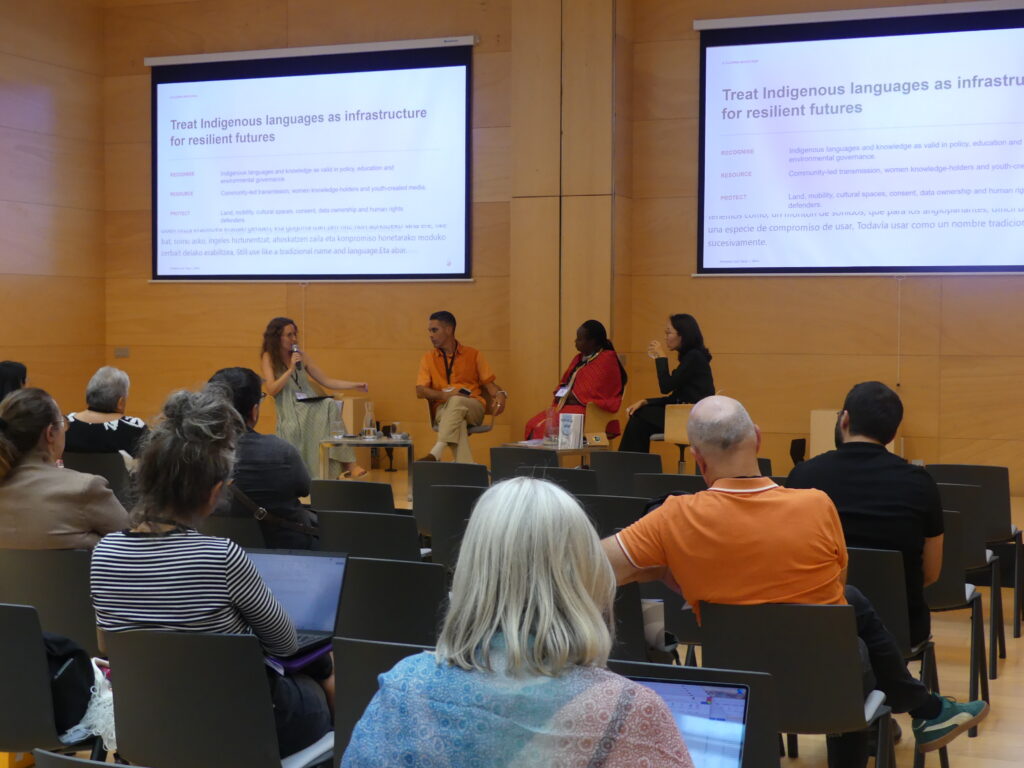
Justina Olko, director of the Centre for Research and Practice in Cultural Monitoring at the University of Warsaw, explores the world of relationships: minority and indigenous languages as tools for social justice and well-being. She offers an academic perspective. Among other things, she explains how the term ‘dialect’ has been used to politically discriminate against different languages. ‘Where do the boundaries between languages lie? The benefits of multilingualism have been analysed in the light of studies carried out in indigenous territories. In particular, it has been observed that people who use their own language most frequently show fewer symptoms of trauma. And their sense of well-being is much greater. ”
Finally, Toroga Breda, representing the Khoikhoi indigenous community of South Africa and the organisation Munanai, spoke of the pragmatic value of languages, and more specifically the dangers of pragmatic discourse: regeneration and folklorisation.
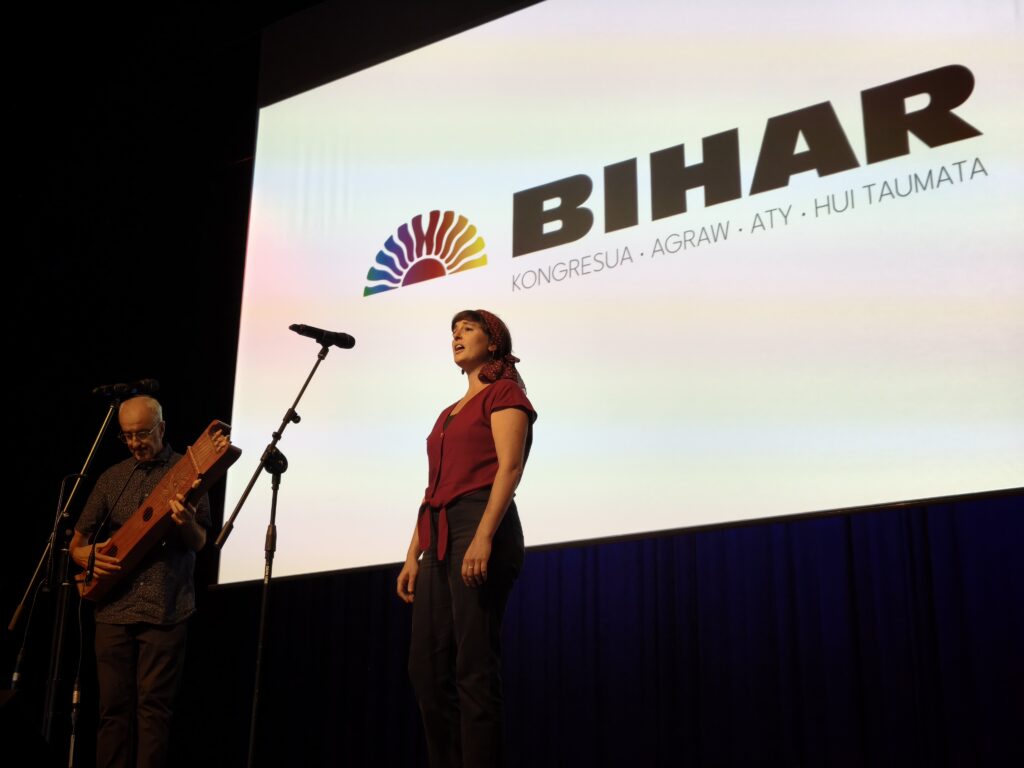
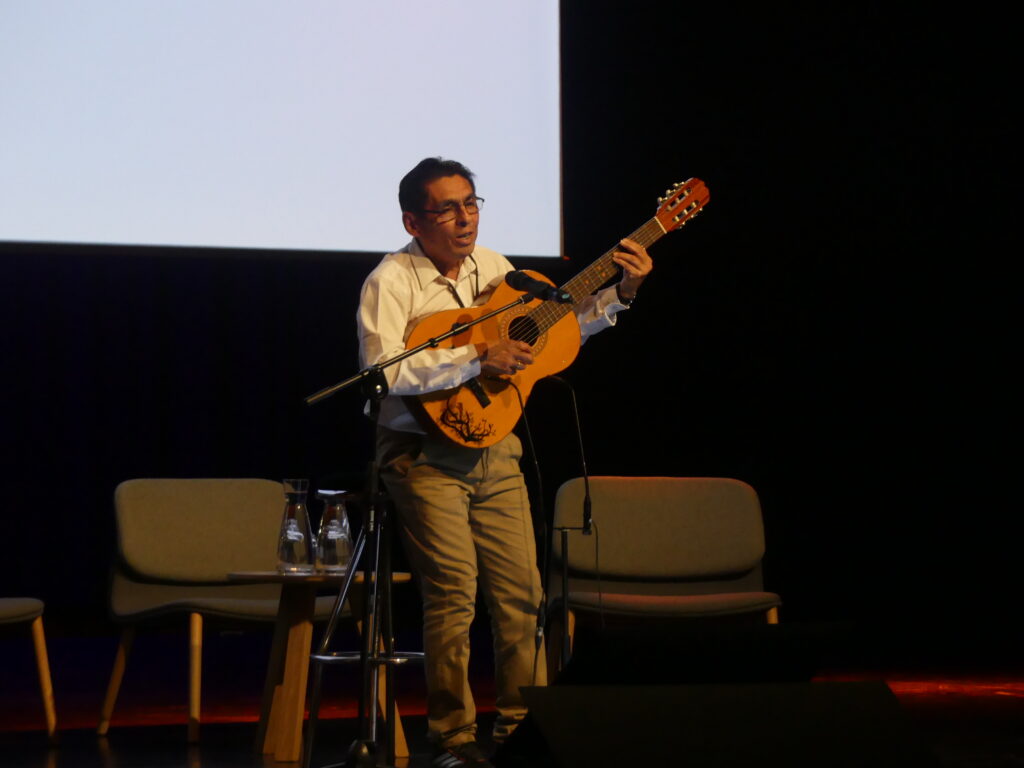
During the morning, there was also a focus on cultural performance. Singers Mixel Etxekopar and Ihitz Iriart performed songs from Zuberoa. And after lunch, Miguel Ángel Verón Gómez sang two songs from the Guarani community in Paraguay.