The BIHAR Congress closes with a multilingual manifesto on the bridge between Irun and Hendaye
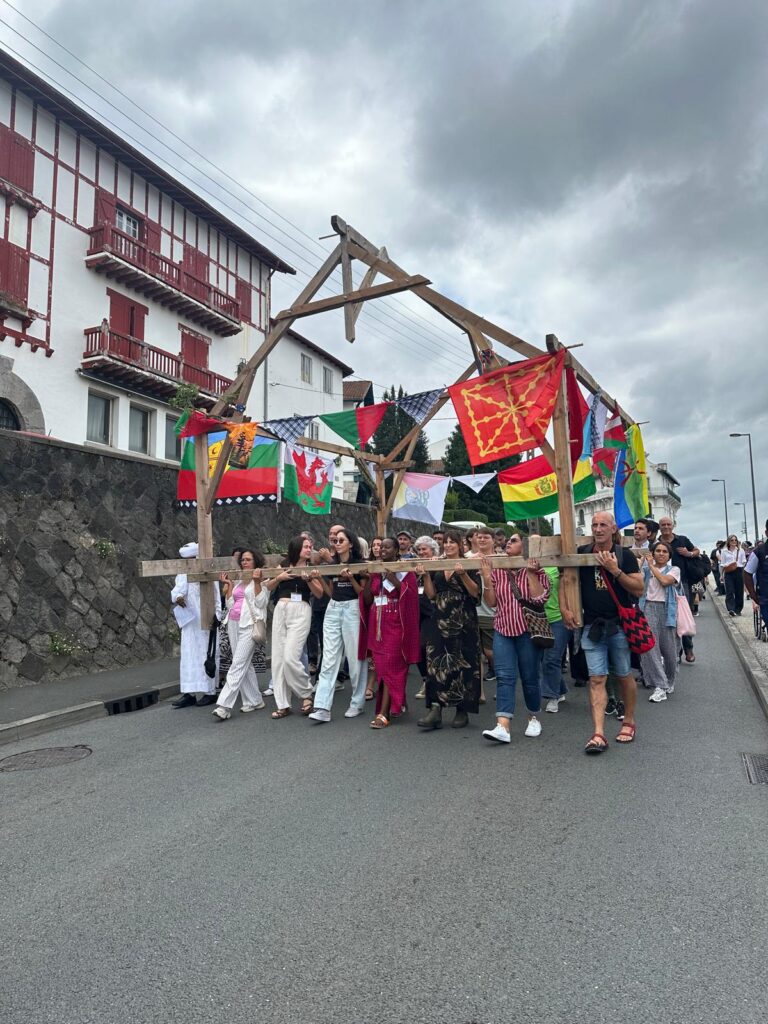
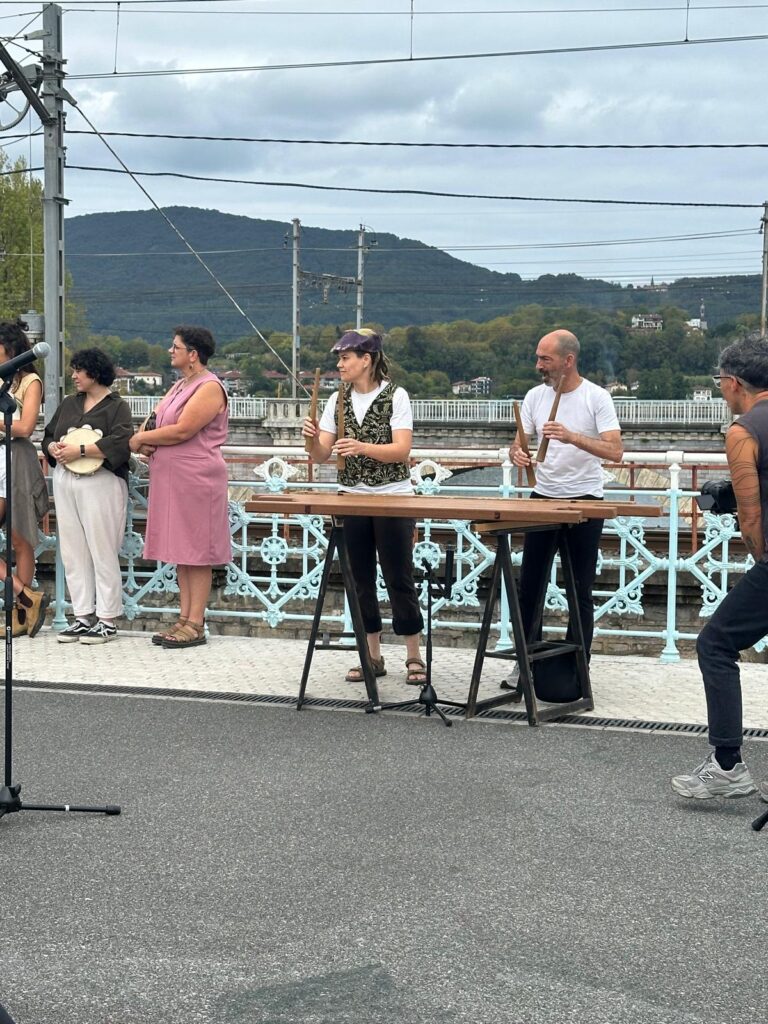
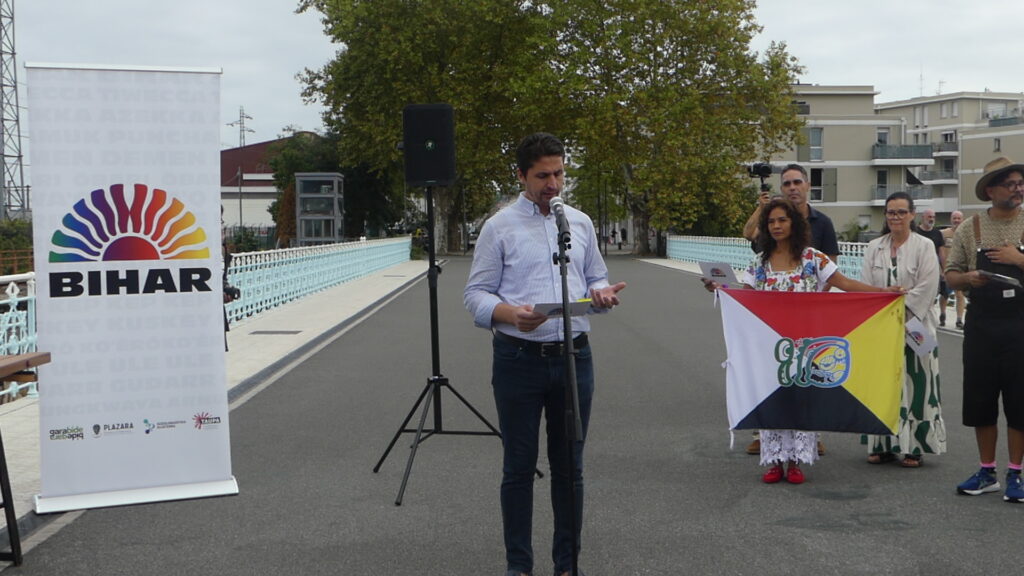
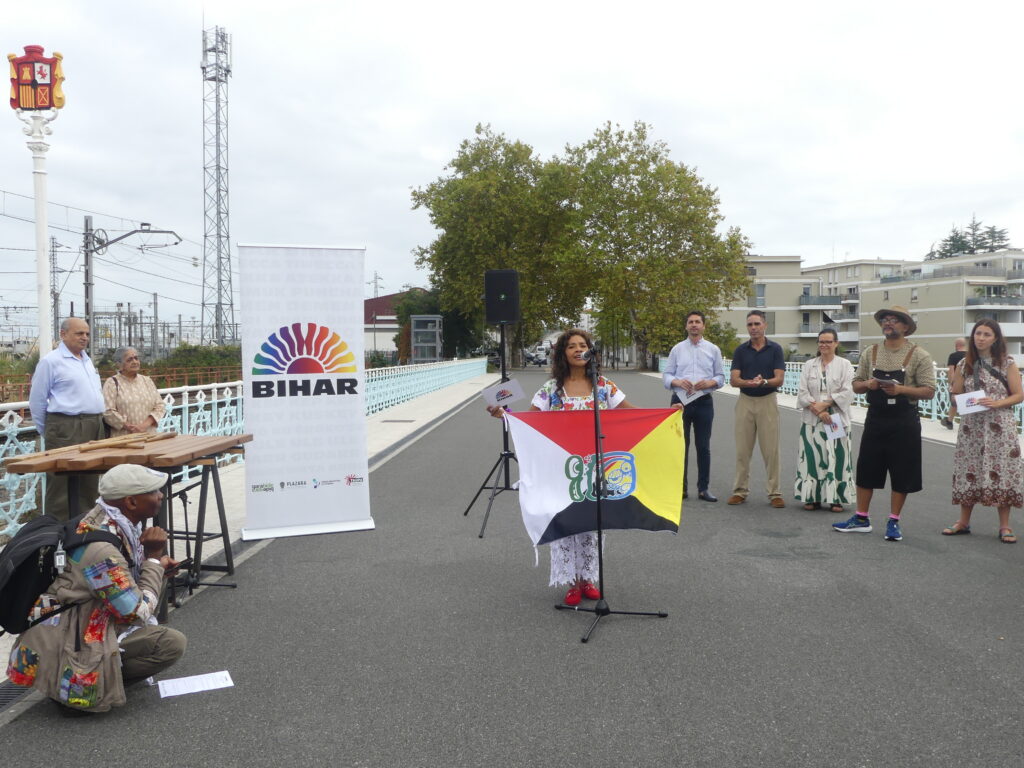
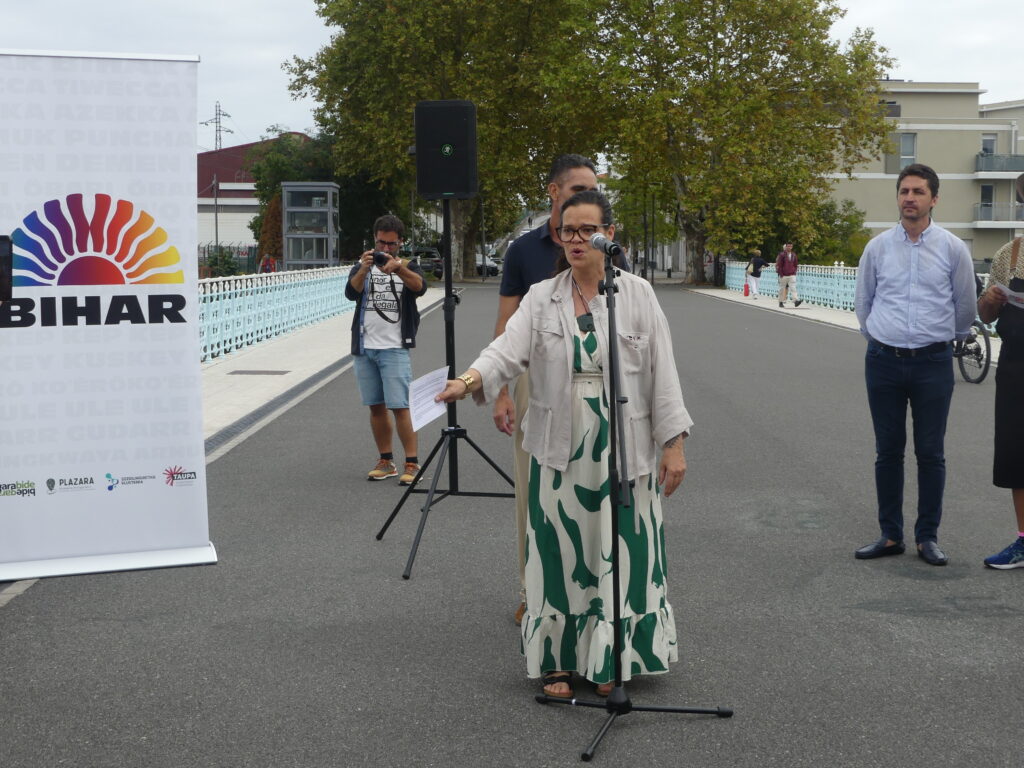
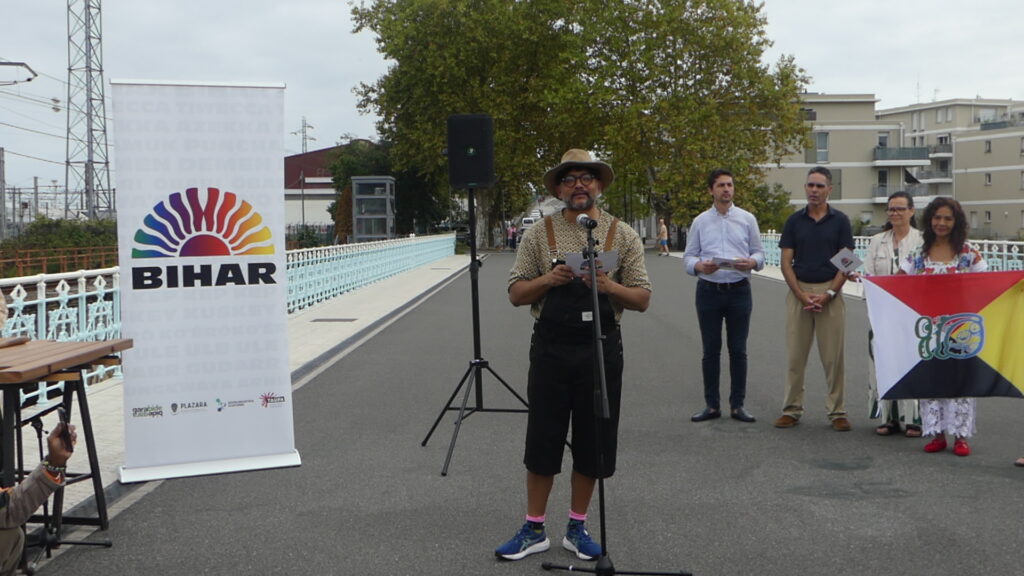
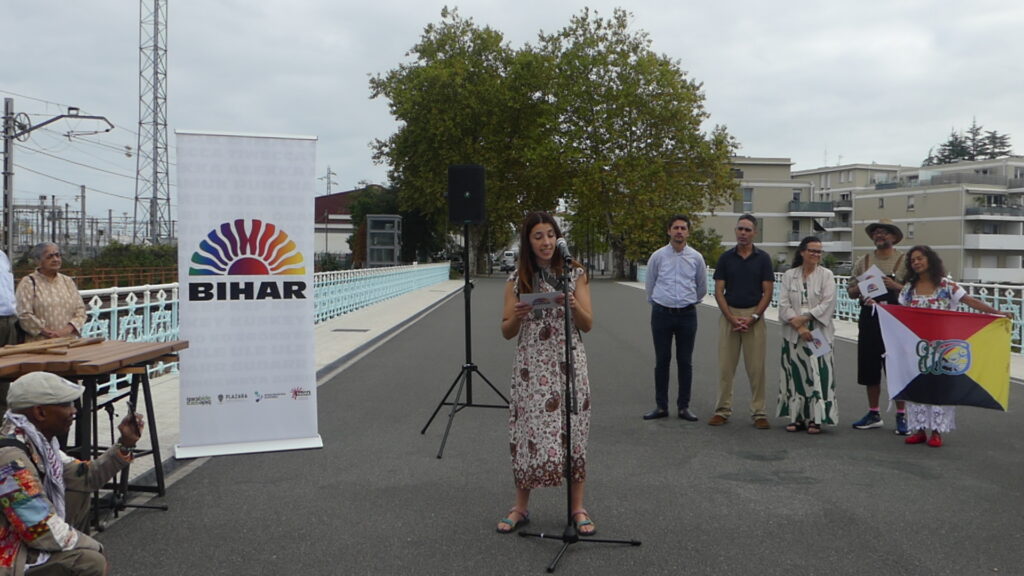
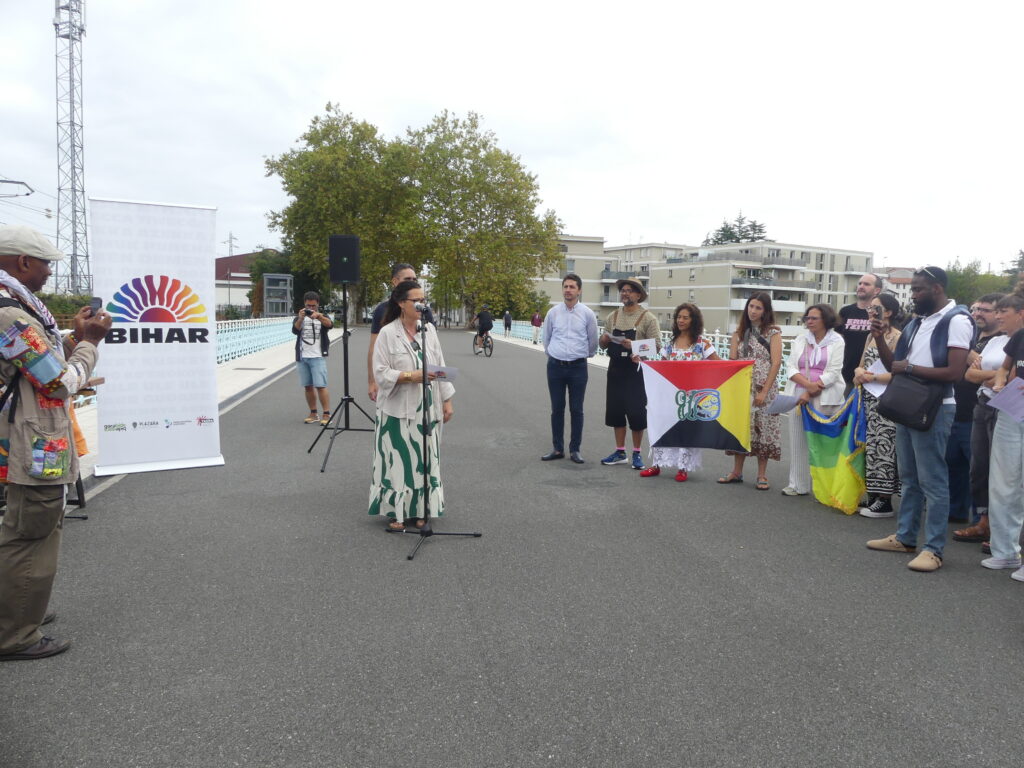
After bringing together around 40 minoritised language communities from around the world for four days, the BIHAR International Congress ended today. The closing ceremony took place on the Santiago Bridge (Zubi Txikia), which spans the Bidasoa river between Irun and Hendaye. There, the manifesto drafted jointly by the language communities undergoing revitalisation was read in five languages, accompanied by txalaparta and dance. The congress was organised jointly by Garabide, Soziolinguistika Klusterra, Taupa Euskaltzaleen Mugimendua and the Plazara collective.
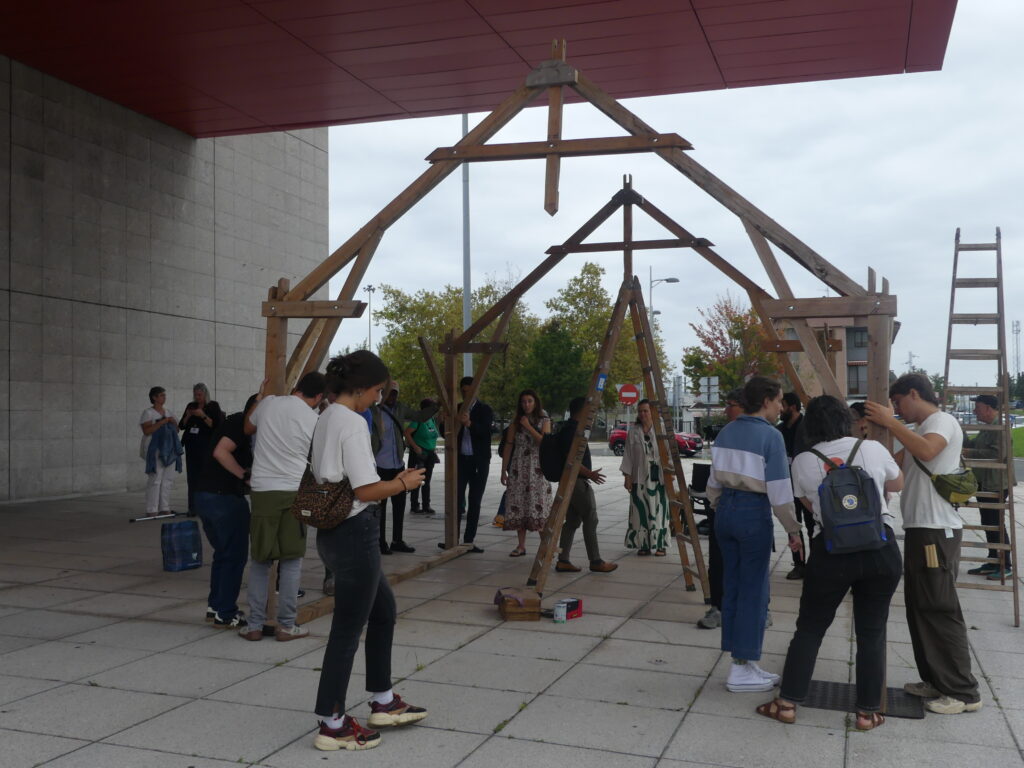
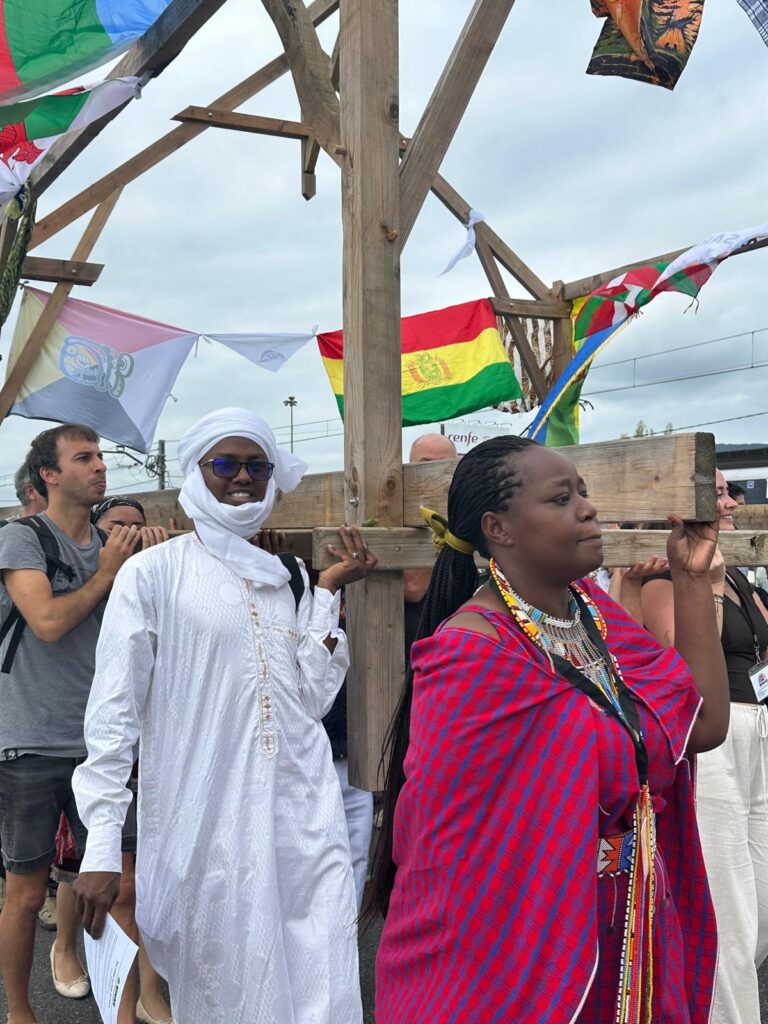
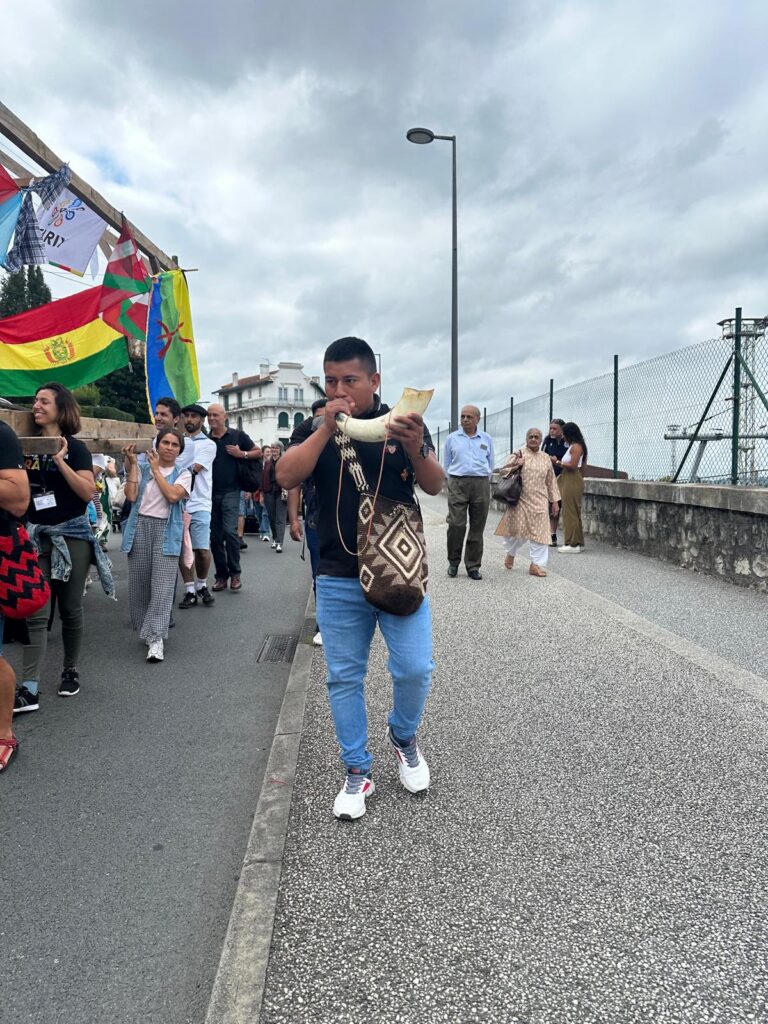
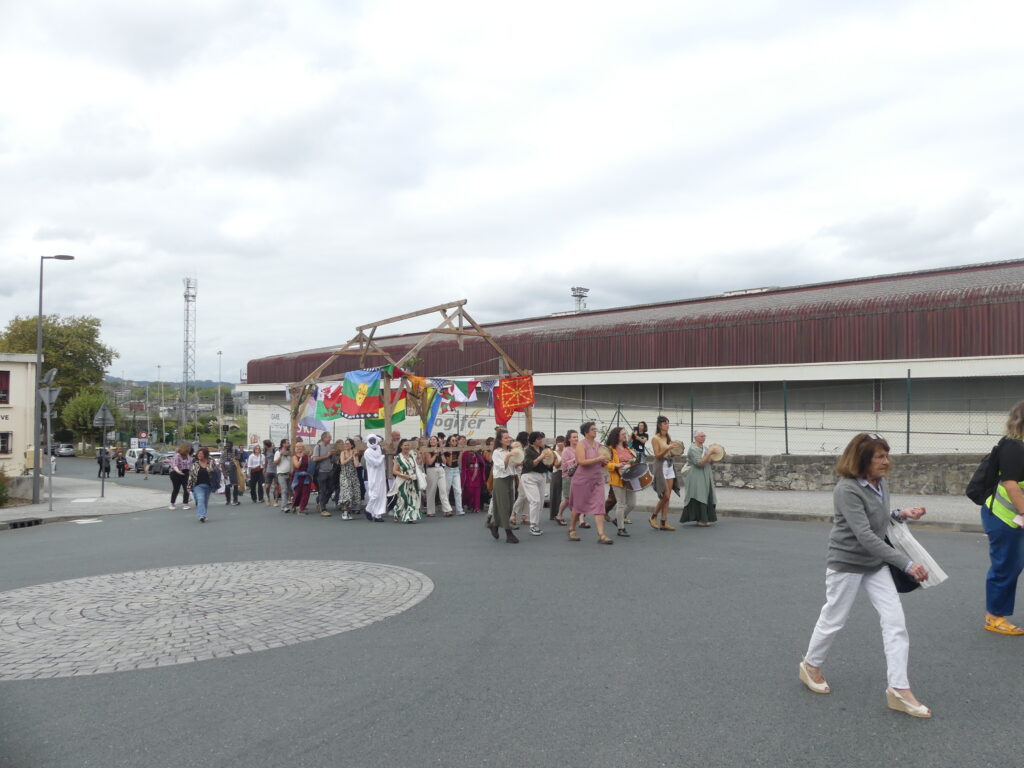
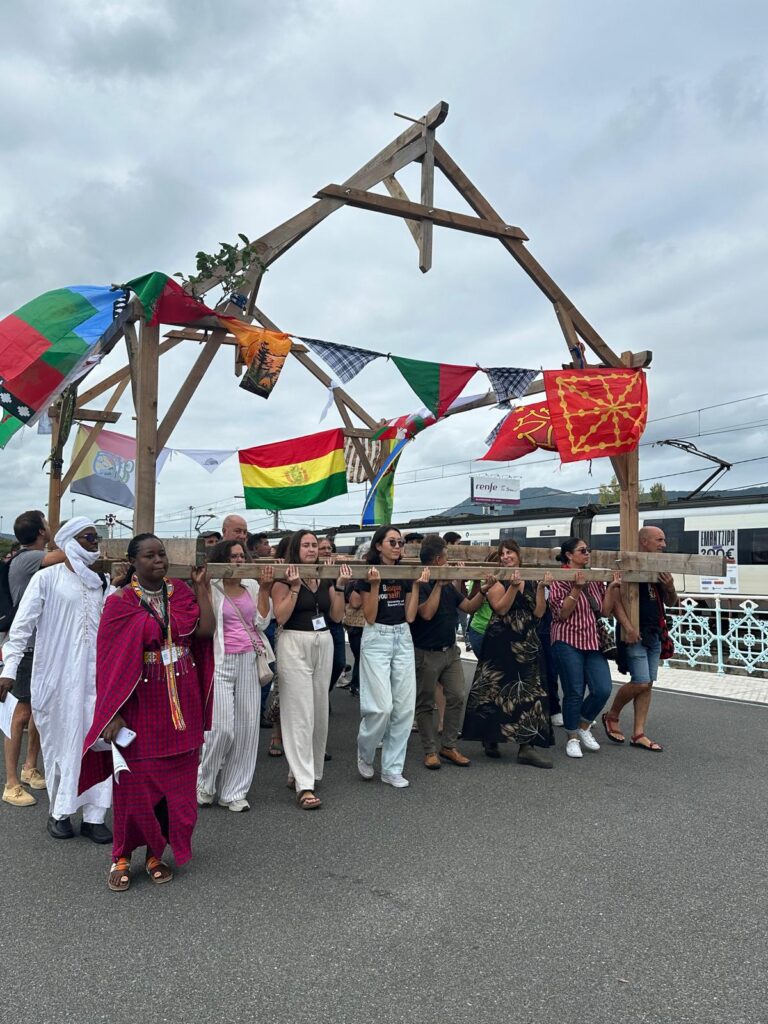
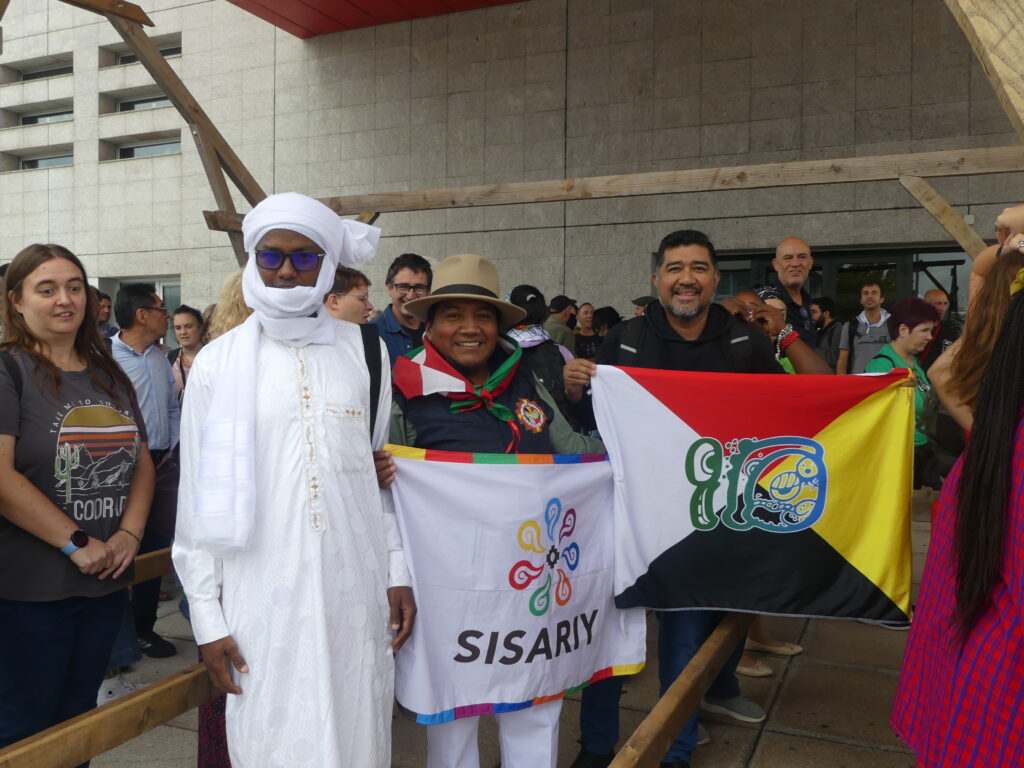
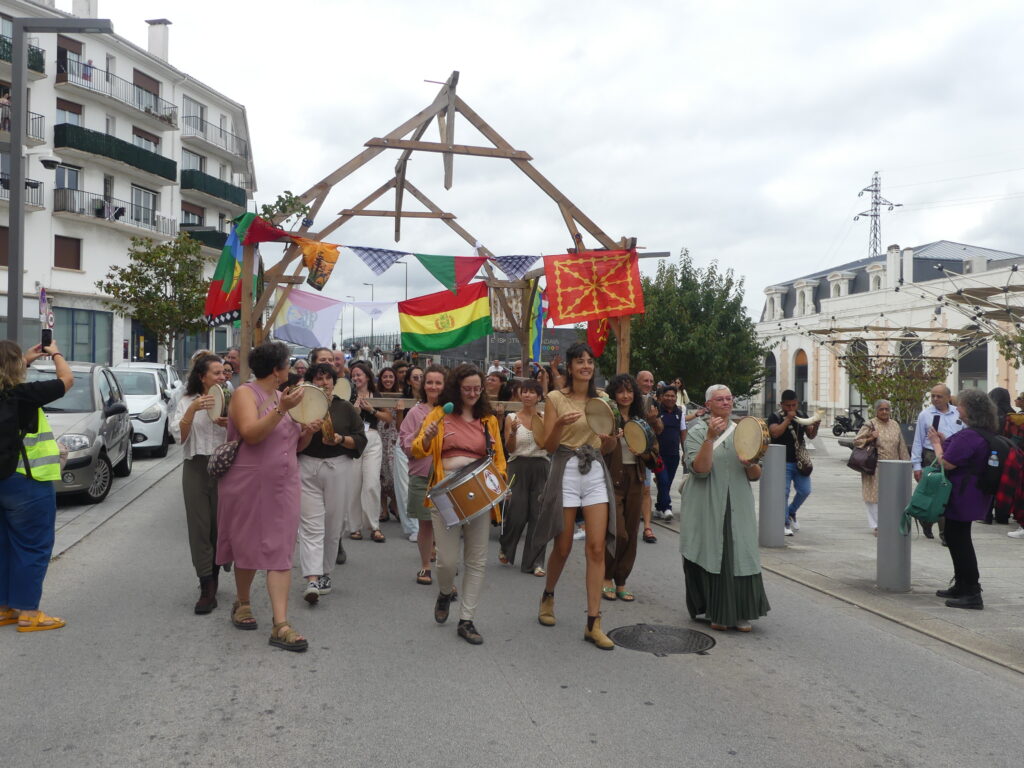
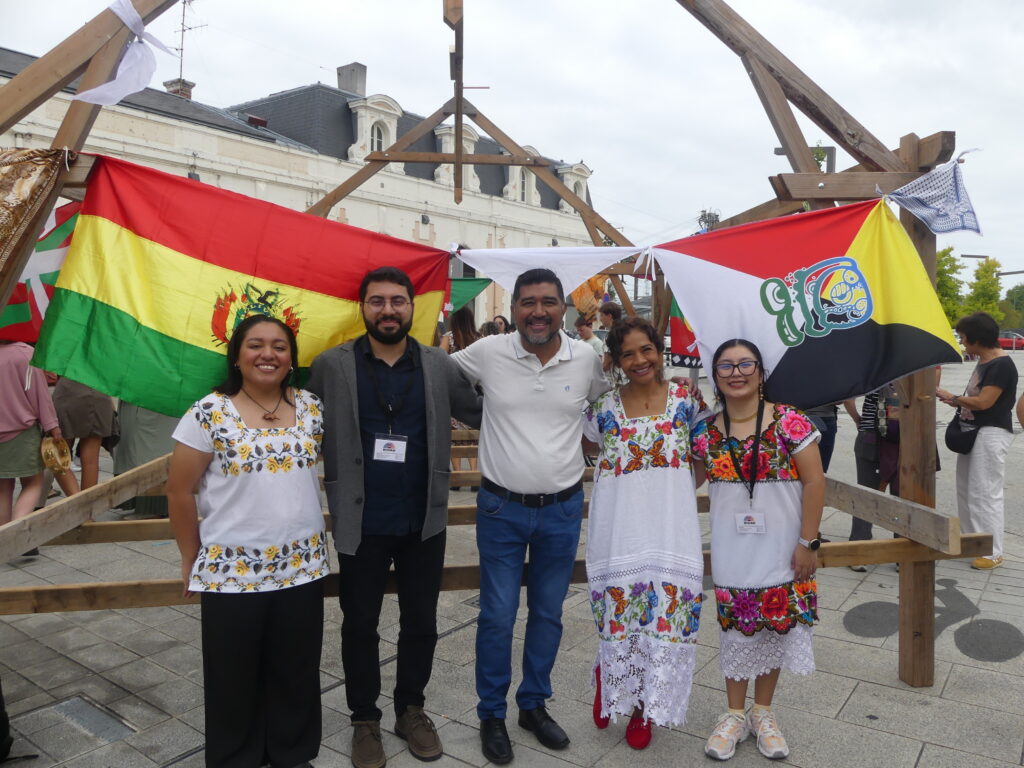
The day began at FICOBA (Irun) with a welcome for the house of Occitan activist Joan Petit. A musical parade then set off, and participants made their way through the streets to the bridge, carrying the wooden house together. The multilingual reading of the manifesto took place there. The event ended at midday at the Borderline factory in Hendaye with a festive drinks reception.
We are not translations
Under the title Our voice, our time, our future, the manifesto makes clear that too many of the world’s languages are being silenced. This happens not by any law of nature, but as a result of inequality, exclusion and homogenisation. Going beyond an account of loss, it calls for reclaiming the future and building it together: “Languages are not relics of the past. They are the breath of living communities.”
In the text, the communities commit to building stronger networks, learning from one another, making their languages more visible and empowering their communities. It also sets out three specific demands:
- To public institutions: move from words to action, develop bold language policies, guarantee stable resources and genuinely enforce language rights.
- To academia: think and work alongside communities, and place them at the centre of its work.
- To international organisations: recognise and protect linguistic diversity as the living heritage of humanity, and guarantee recognition for language communities undergoing revitalisation.
Above all, however, the communities address themselves: “Not to wait. Not to give up. Not to stay silent. Because every language is a world.” The manifesto sums up its message as follows: “We have much to offer the world. We are not translations. This is our voice. This is our time. And this is our future.”
Four days, three cities, 40 communities
The congress opened on 23 September at the Euskalduna Palace in Bilbao, attended by representatives of the institutions that make up its support network. At the opening, coordinator Gorane Ayesta Maidagan stressed that each community comes from a different reality, but all are united by the drive to breathe life into their languages. She also paid special tribute to Elias Caurey, a member of the Guarani community, and Zubair Torwali, a member of the Torwali community, who were unable to attend after being refused visas.
On 24 and 25 September, FICOBA (Irun) hosted the core of the congress. Belen Uranga of Soziolinguistika Klusterra presented the findings of the international diagnosis study. The study classifies revitalisation discourses into three dimensions: symbolic-identity, political-transformative and pragmatic. She was followed by speakers including Rahera Cowie from Aotearoa (Māori), Paolina Vercoutere Quinche from Ecuador (Kichwa), Nabraj Lama from Nepal (Tamang), Justina Olko of the University of Warsaw and Toroga Breda from South Africa (Khoikhoi). They discussed the links between language, identity, social justice and health.
On the 25th September, the third day, resistance and agency were the central themes. Tahir Baykus, Lorna Wanosts’a Williams, Clayton Cruse, Barbara Filion and Ganesh Devy shared experiences from Kurdistan, Canada, Australia and India. They addressed the need to recognise language as a human right, oral transmission and the gaps in language policy. In the round table that followed, Anna Belew, Mustapha el Adak and Michel DeGraff examined whether a shared narrative can be built across communities. They concluded that the struggle for human rights and the desire to be respected are features common to all of them.
Alongside the talks, performances by artists from the Global South and the Basque Country completed the programme, together with cultural events in Hendaye. More than 200 people attended the congress each day.
The end of a two-year journey, the start of a new network
he congress was the final step in a three-phase process. The first phase was an international diagnosis study carried out in 2025, which used an intersectional lens to analyse new discourses emerging from communities in the Global South. The second was a socialisation process held in the Basque Country from April to June 2026, with 20 sessions in 10 towns and more than 150 participants. Beyond the Basque language movement, it included representatives of other social movements as well as people who do not speak Basque.
Alongside the manifesto, the congress set up a working committee to promote the World Federation of Communities in Language Revitalisation Processes. It is intended as a space still under construction: a network built on equality, with a horizontal and circular structure based on mutual interaction. The federation will have three main functions: it will strengthen practical cooperation between language communities; it will give them a presence before the major world languages and institutions and it will build their capacity for collective influence in the international forums where issues affecting the future of our languages are debated.
The BIHAR initiative has been supported by: the Basque Agency for Development Cooperation and Solidarity (Basque Government), the Department of Culture and Language Policy (Basque Government), Euskarabidea – Navarre Institute of the Basque Language (Government of Navarre), the Provincial Council of Bizkaia, the Provincial Council of Gipuzkoa, the Basque Cultural Institute (Euskal Kultur Erakundea), Bilbao City Council, Irun City Council and Beasain Town Council.