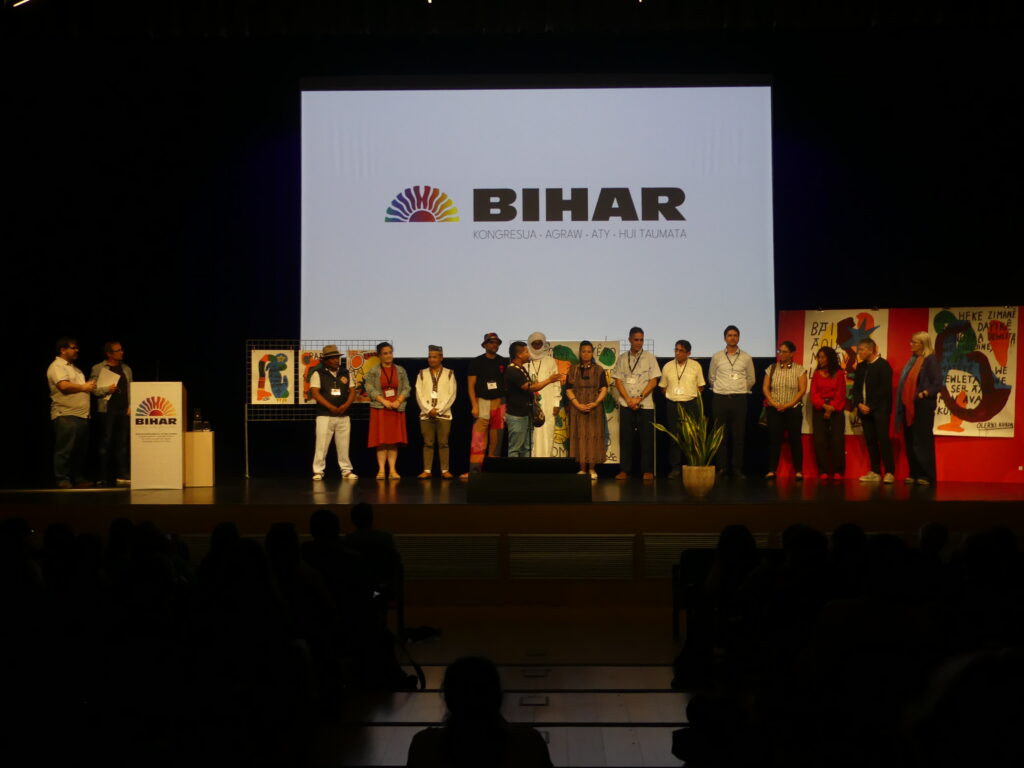
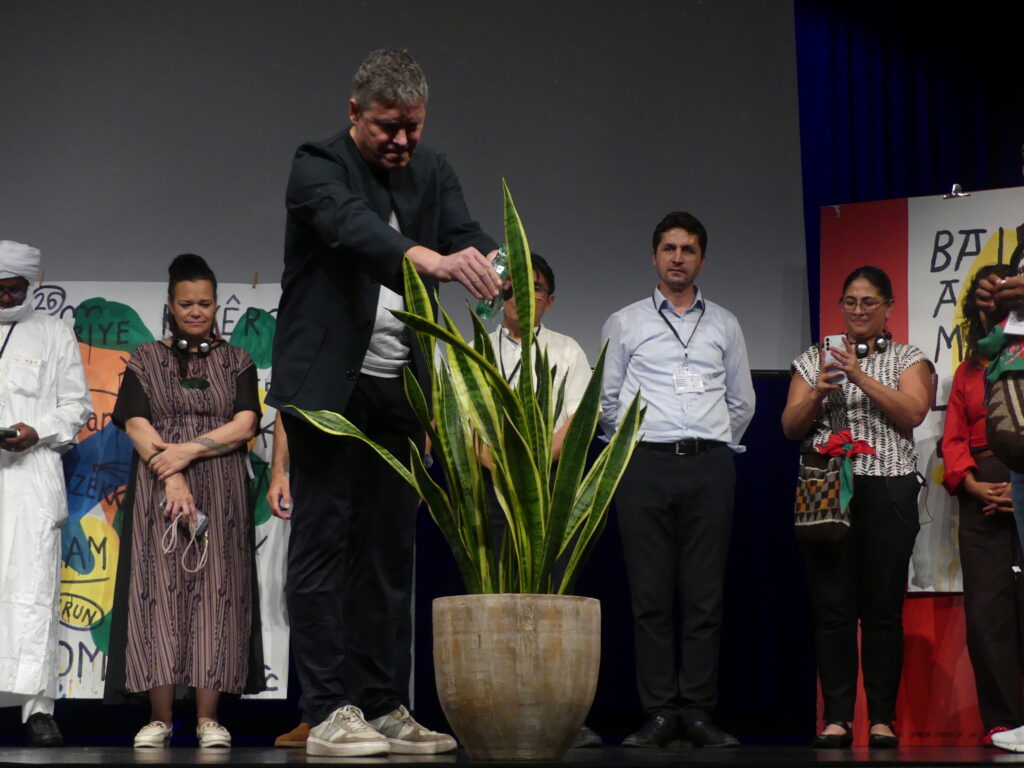
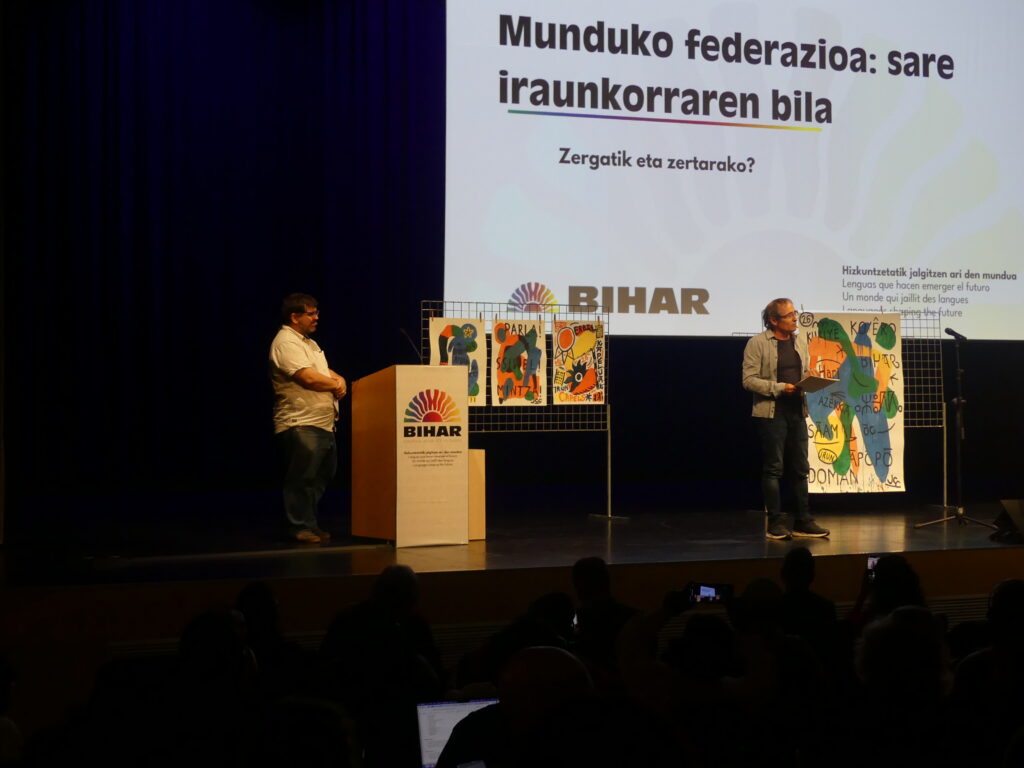
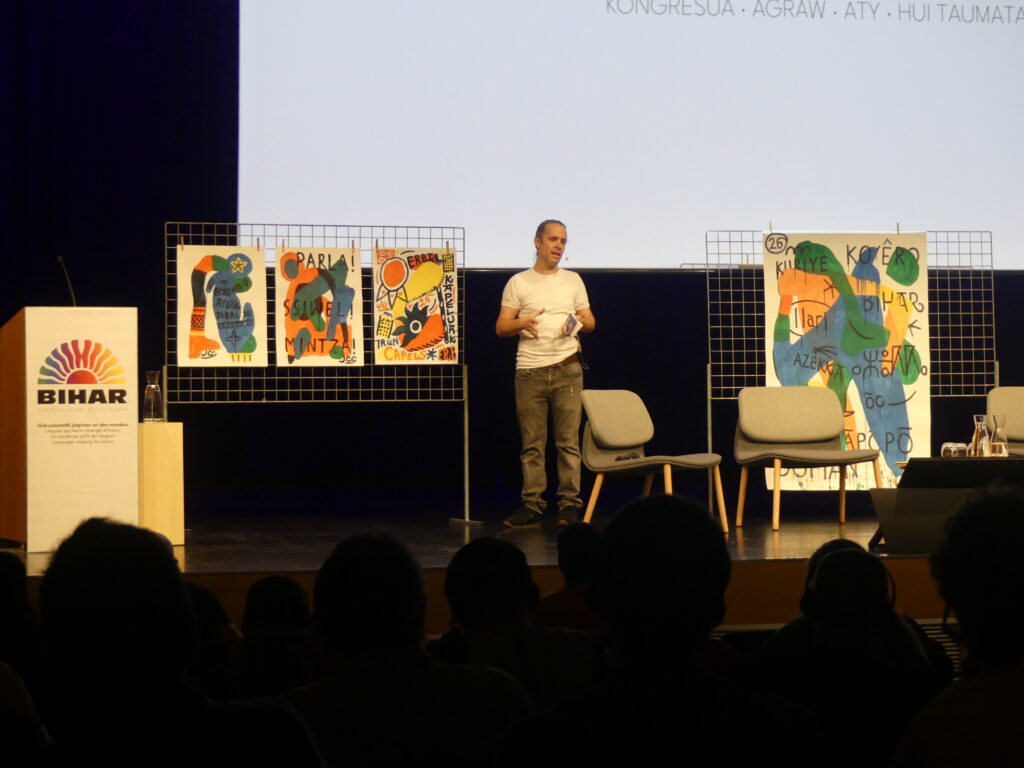
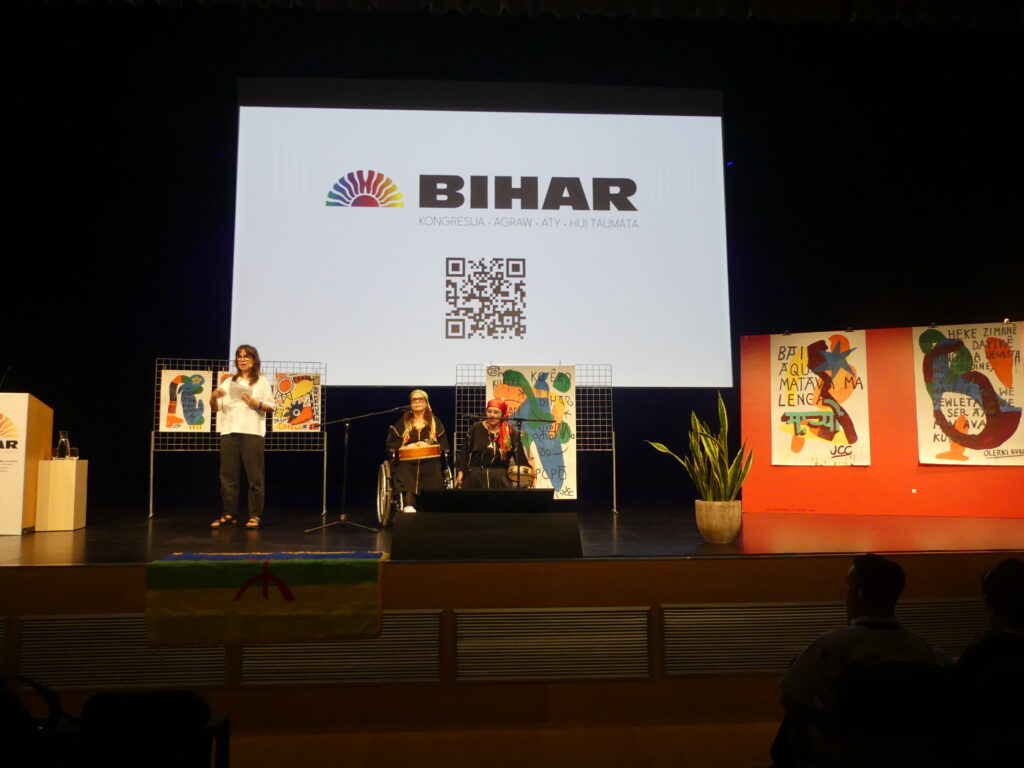
Moving away from each community organising itself to preserve its language, towards linguistic communities working together to reshape the conditions in which their languages thrive. To this end, Garabide proposed at the BIHAR International Congress a World Federation of Languages in Revitalisation so that, together, they can reform the conditions in which their languages thrive. With the proposal presented today in Irun, it’s been emphasised that the federation will be aimed at linguistic communities, social organisations, public administrations, knowledge institutions and all those committed to the future of languages, and that it has no intention of either representing them or standardising them. “Its purpose is to get to know one another, to help one another and to act together.”
“So far, we have learnt how to keep our languages alive. Now, together, it is time to create new conditions,” said Garabide members Urtzi Urrutikoetxea and Jon Sarasua. Joining them on stage were members from different communities who will guide these first steps, and they explained that, for the time being, today’s event has served as an invitation to work together to flesh out this proposal. They will continue to explore this in greater depth over the coming months.
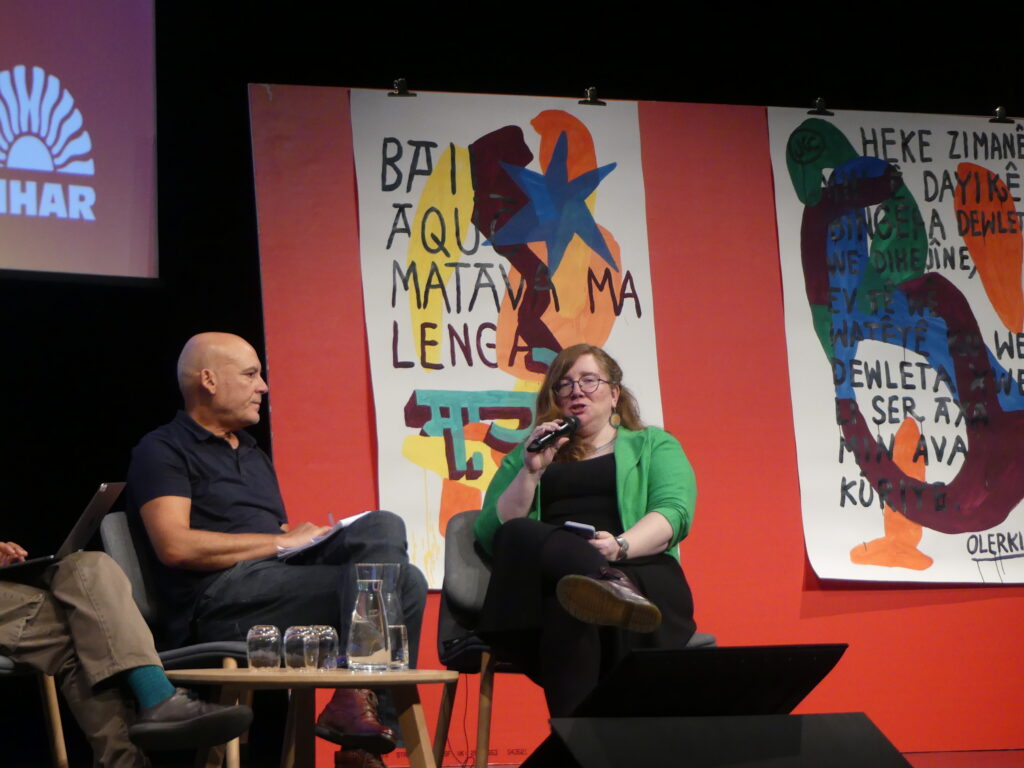
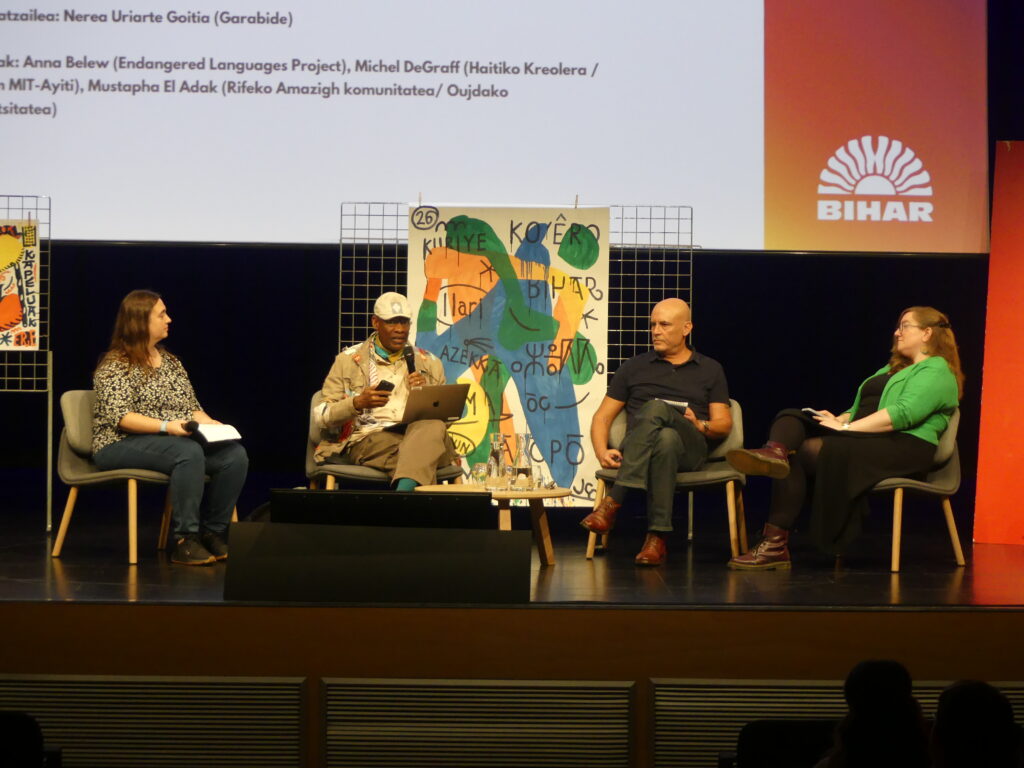
The BIHAR Congress is holding its third day of proceedings today and, having heard about different experiences, has set about identifying similarities and reflecting on whether a shared narrative and collective imagination are possible among language communities undergoing revitalisation worldwide. During the round-table discussion, chaired by Nerea Uriarte Goitia of Garabide, a question was posed: Is it possible to articulate a shared narrative or collective imagination at a global level among different communities engaged in linguistic and cultural revitalisation?
The panellists were Anna Belew, director of Endangered Languages Project; Mustapha el Adak, a member of the Amazigh community in the Rif and a researcher at the University of Oujda; and Michel DeGraff, a member of the Creole community in Haiti and a lecturer at MIT Ayiti. They agreed that it is difficult to arrive at a unified narrative, but were able to identify characteristics shared by linguistic communities undergoing revitalisation: “We share the struggle for human rights”, “in all of them there is a desire to be respected”, and that language can be the path to freedom: “the linguistics of liberation, the freedom to decide your future from a linguistic perspective”.
From feeling ashamed to taking control
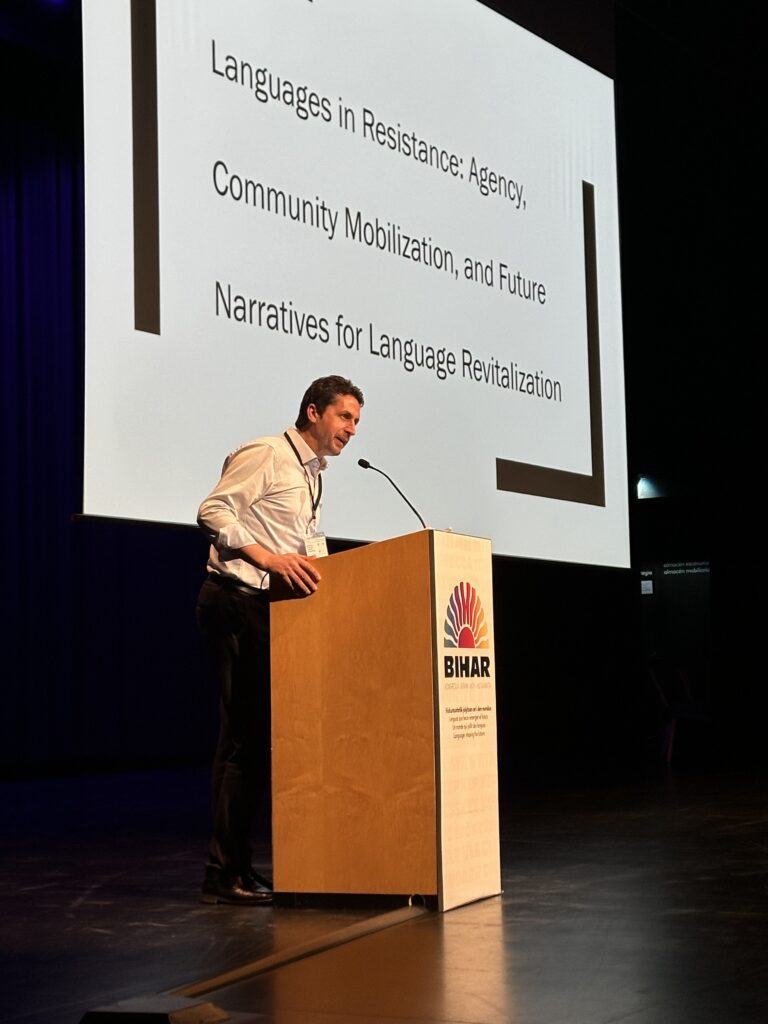
his morning also provided an opportunity to learn about various experiences from around the world. Tahir Baykusak, a Kurd, kicked off today’s proceedings. A representative of Diyarbakir City Council, he is the director of the language development and preservation department. In his presentation today, he spoke about the resilience of languages, taking agency, community mobilisation and the need for new narratives. He referred in particular to the situation of the Kurds who are subject to the Turkish state. Looking back from the year 2024, he asserts that a shift is taking place from recovery to revitalisation. “Having theatres is important, running courses is important, but the language needs a presence within the family, in education, in institutions, and even in the imaginations of young people. How do we do this? Together. We too can learn from what others have done. We must know how to persevere, but we have to learn how institutions should operate and how to pass the language on to new generations.”
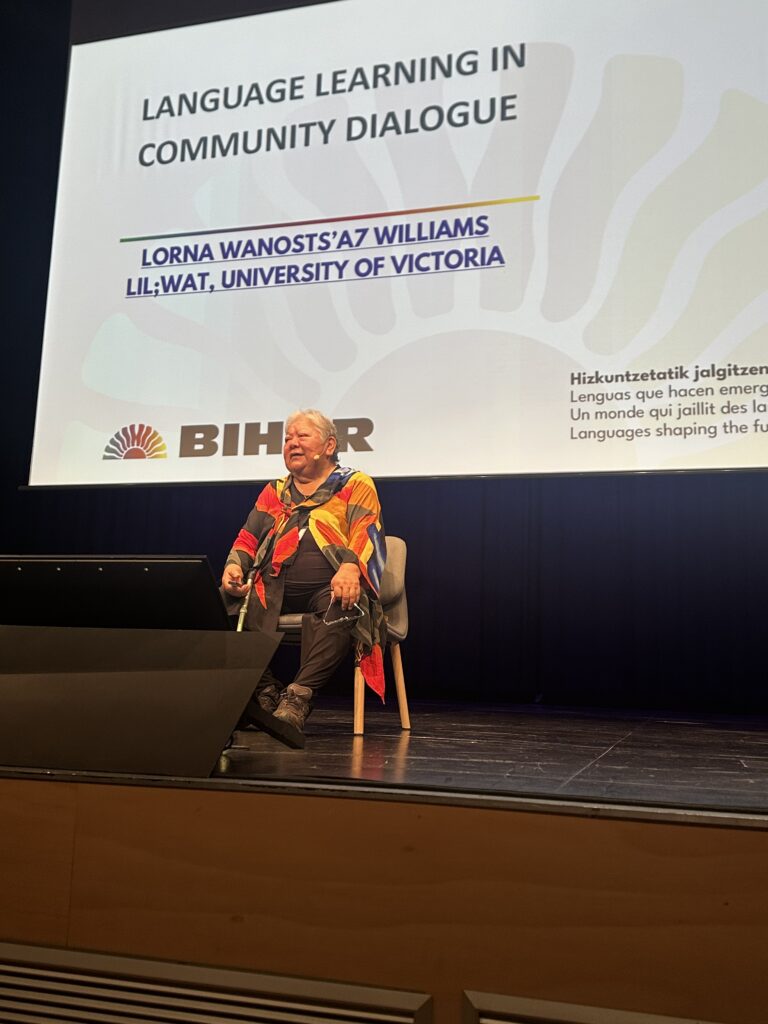
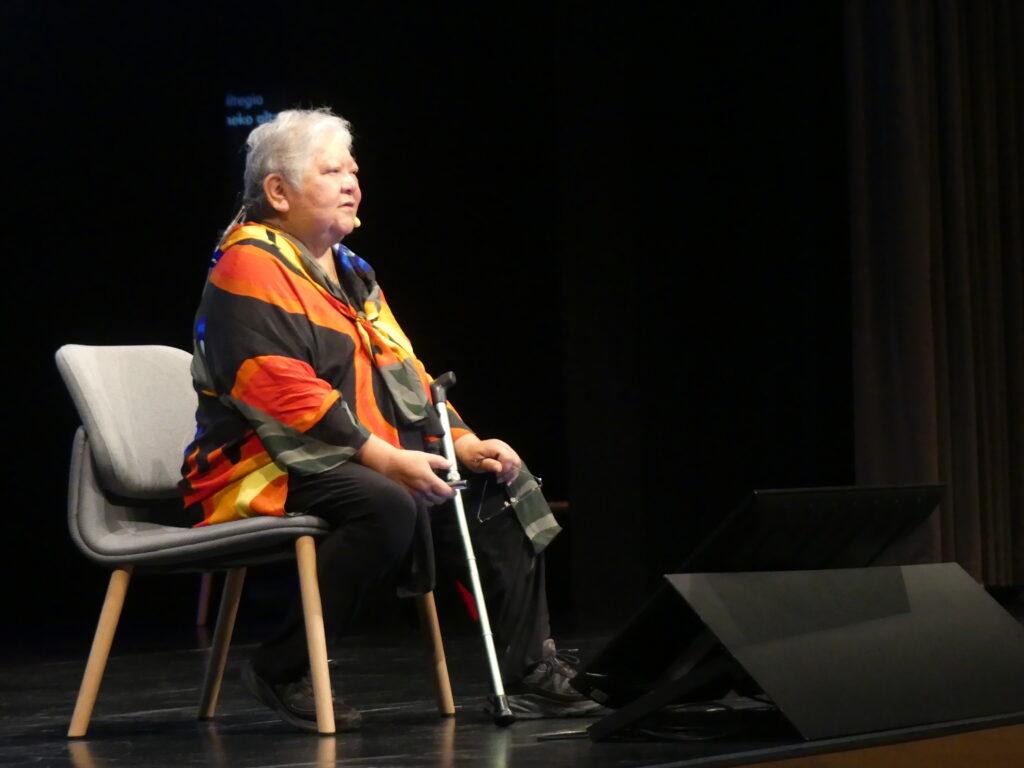
Lorna Wanosts’a Williams, from the Lil’wat community in British Columbia, Canada, is the director of the Language Revitalisation Programme at the University of Victoria. She spoke about storytelling and community empowerment: about building collective agency through one’s own voice. “The bad weather in Canada has allowed us to come together and tell stories; we have passed on our knowledge through stories. From them we have learnt how to care for the land and the animals, where we can go and where we cannot… These stories speak of life. The spoken language is of enormous importance. We need to reconnect with the land through language,” she emphasised.
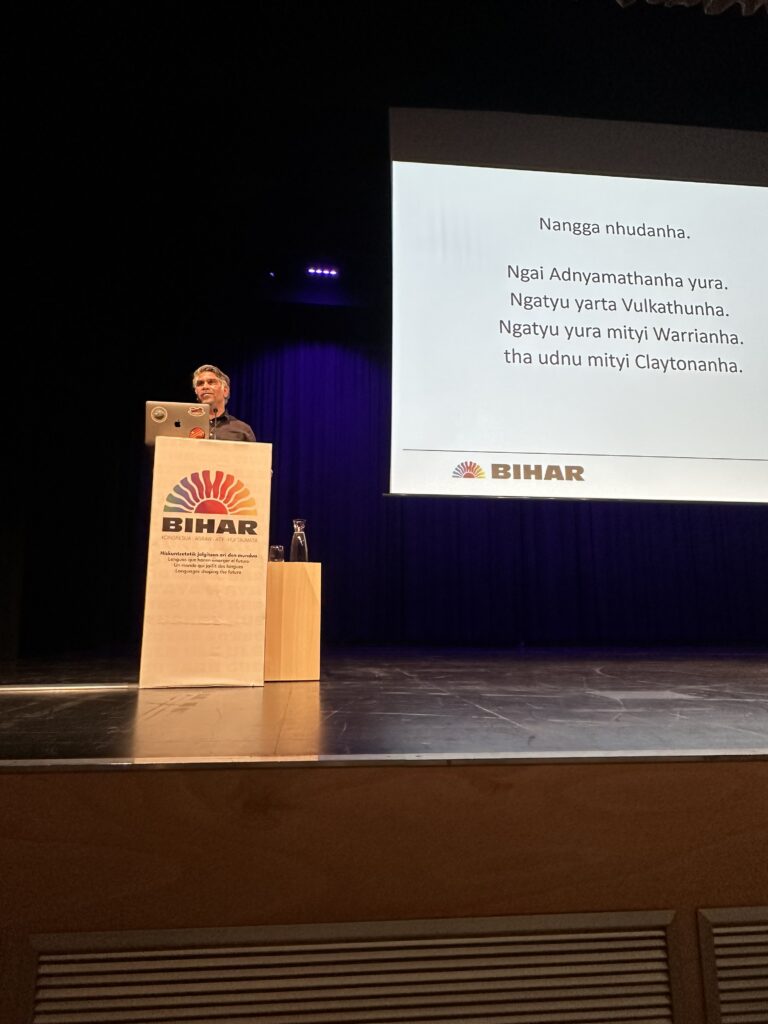
Clayton Cruse (his “white name”) has travelled from Australia; he is a member of the Adnyamathanha community and a representative of IDIL Australia. He spoke about voice and justice, about social struggles to revitalise languages, and about the leap towards agency. He pointed out that Australia has no national policy or federal legislation on Indigenous languages. “We are developing an Indigenous languages bill that recognises this right. We want to have our own seat at the table, our own right to decide. Indigenous peoples are the most consulted people in the world, yet those responses end up gathering dust in a drawer. We are working to bridge that gap.”
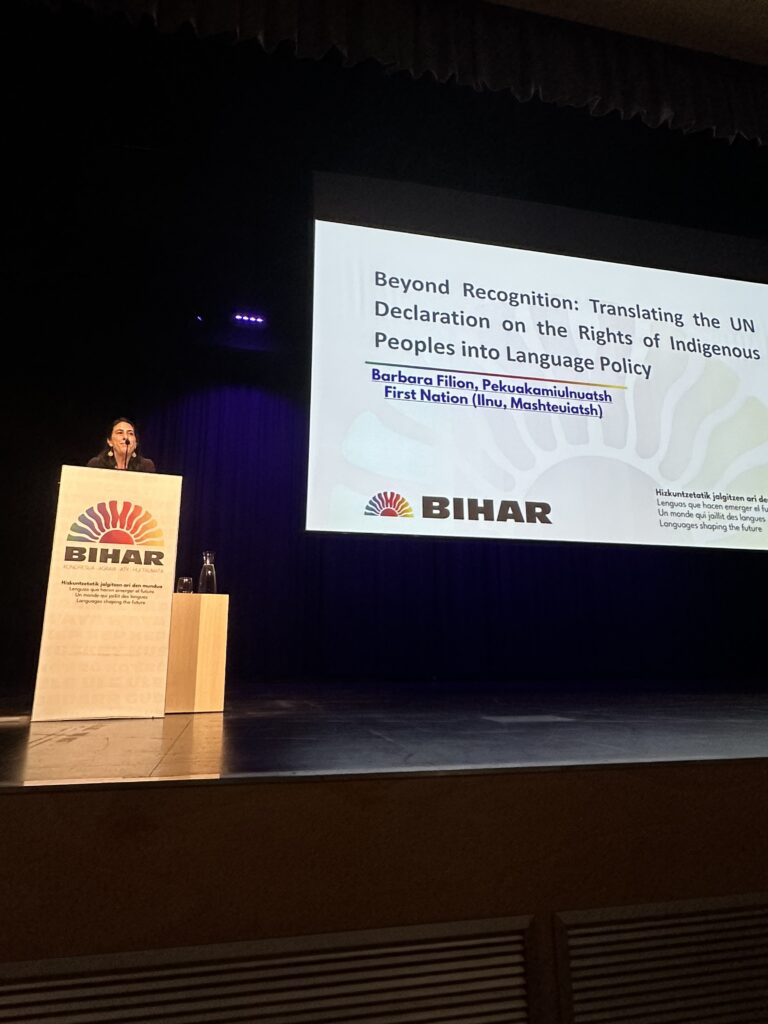
Once again, we have turned our attention to Canada. Barbara Filion, a member of the Innu-aimun community and head of the Culture Programme at the Canadian Commission for UNESCO, spoke about rights beyond recognition, and how these are reflected in the language policy of the United Nations Declaration on the Rights of Indigenous Peoples. She emphasised that language is a human right and that language encompasses all rights. In Canada, there are more than 80 languages, none of which are officially recognised. “We are working to ensure that language is recognised as a right. Canada valued the United Nations’ recognition, and this is now taking shape through a series of recommendations from our working group.” She also referred to the situation in Quebec. “It is a very difficult place for our languages because there is a tremendous effort to protect French. They do not want to be seen as colonisers; they claim they are the colonised, and there is a movement to eradicate minority languages; indigenous languages are completely denied.”
Ganesh Devy, from The People’s Linguistic Survey of India, spoke about India. He referred to cultural discourses and the symbolic construction of identity attachment. He provided data on India, such as the fact that the 1961 census recorded 1,652 mother tongues, a figure that has fallen to 109 in the current official register.