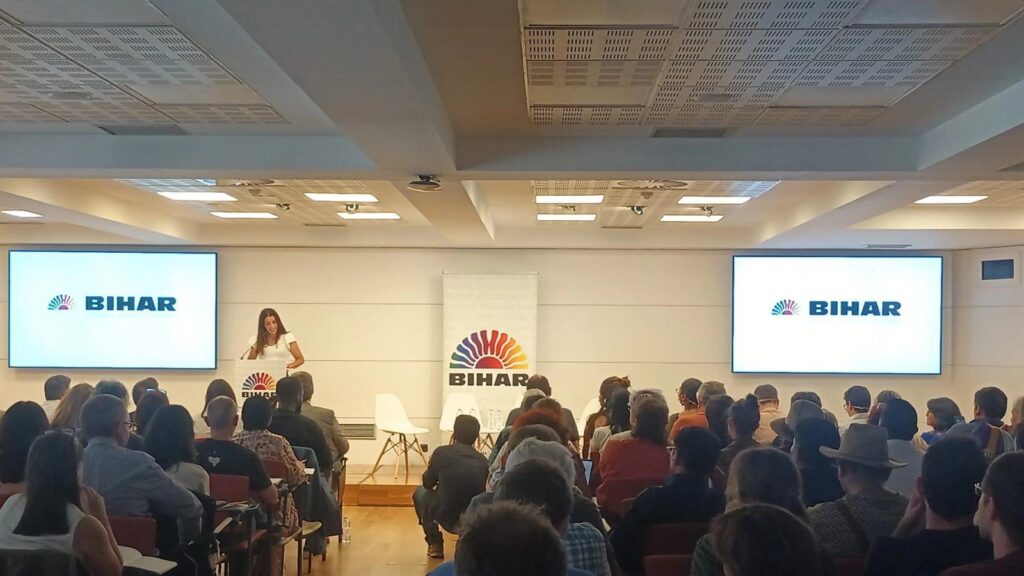
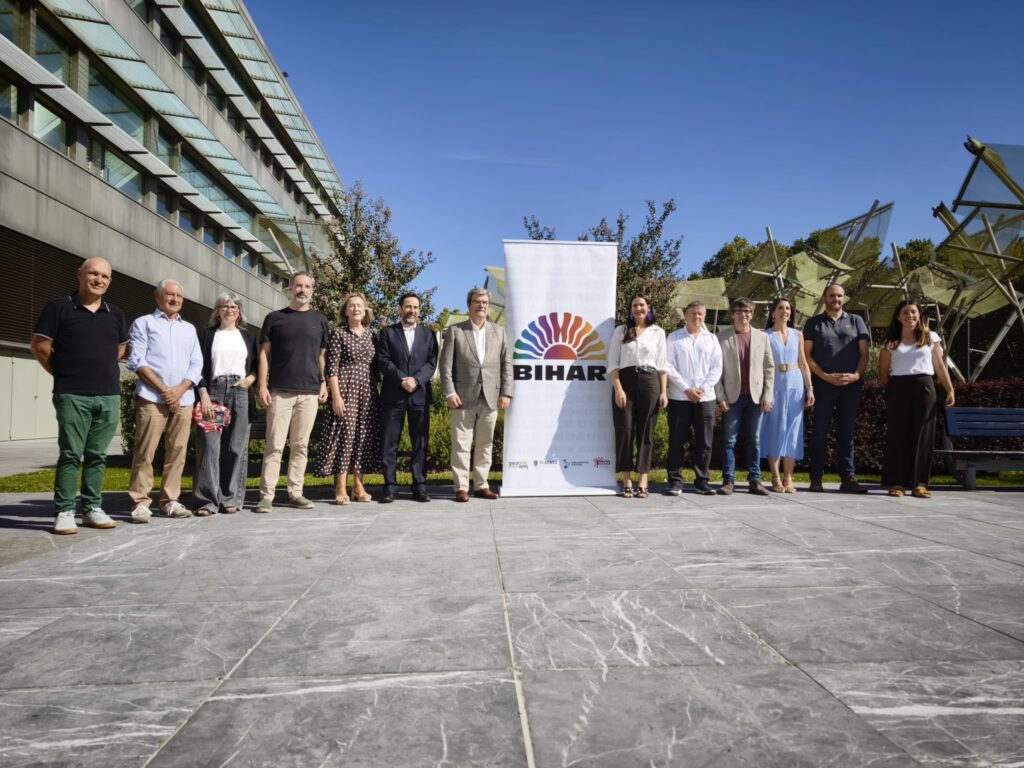
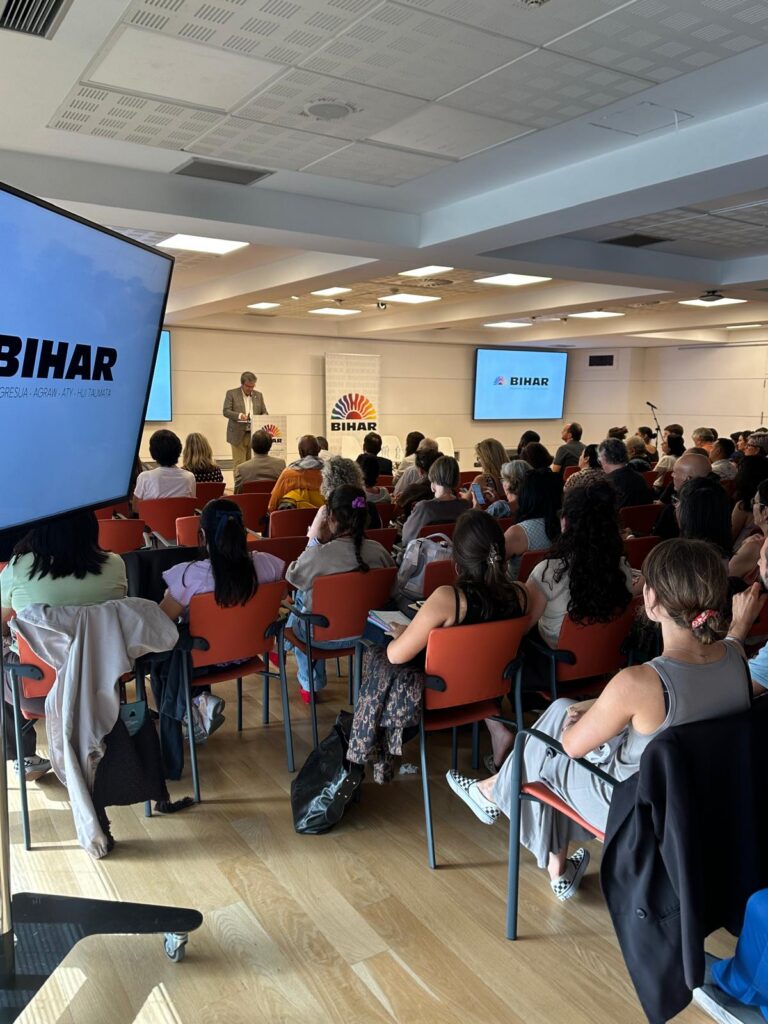
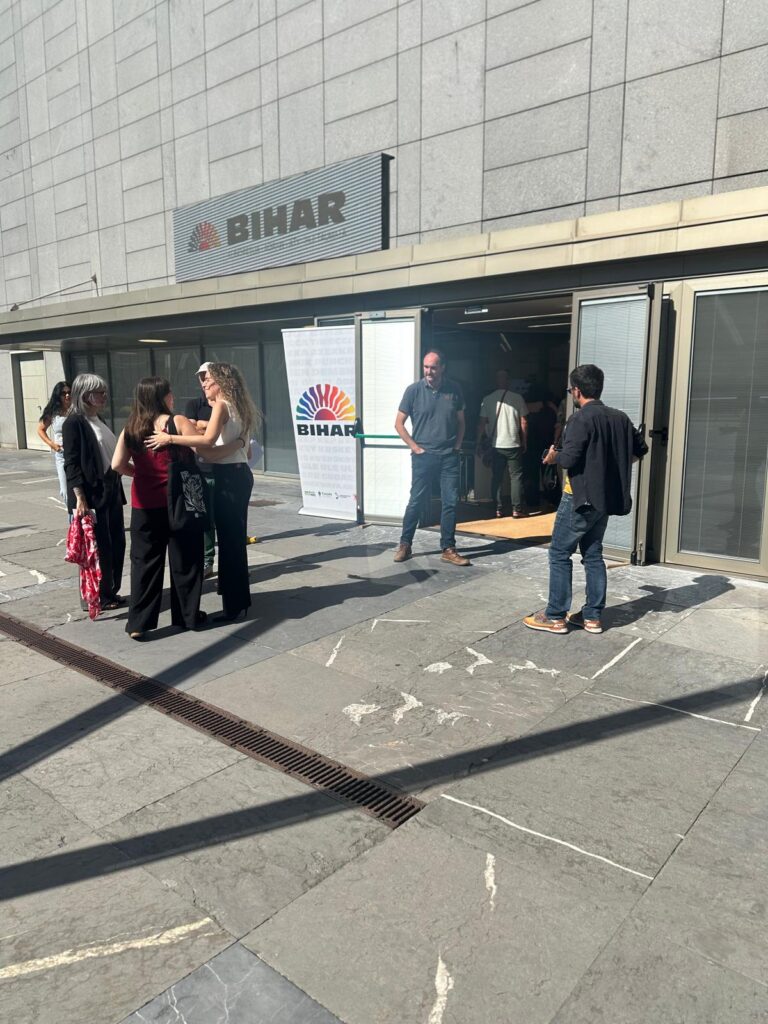
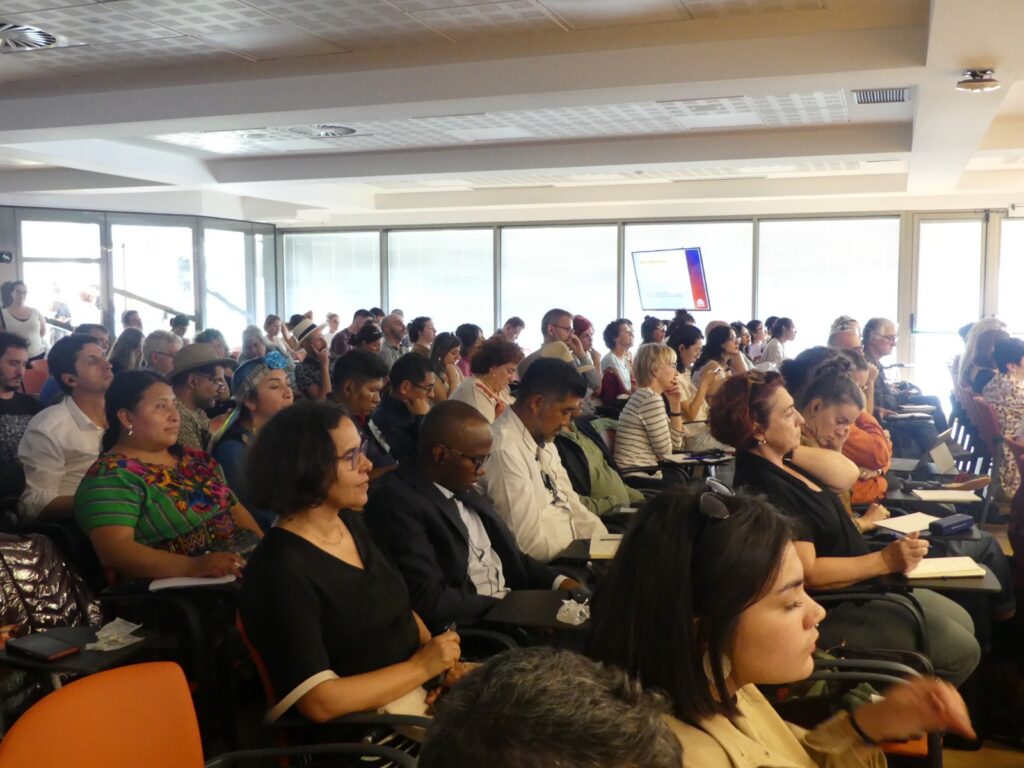
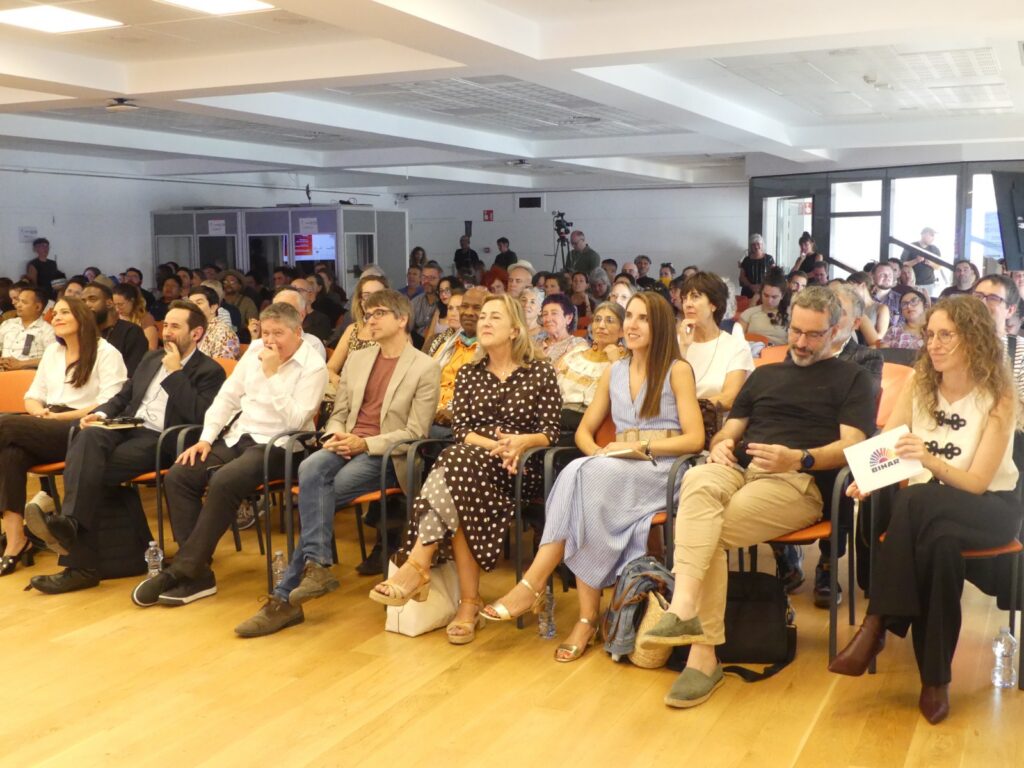
The Euskalduna Palace in Bilbao has hosted the opening of the Bihar Congress, organised in collaboration with Garabide, Soziolinguistika Klusterra, Taupa and Plazara. Starting today, the Basque Country will host the International Congress on Minority Language Communities in the Process of Revitalisation until Saturday. This event aims to bring together the world’s various linguistic communities, reflect on discourses surrounding language revitalisation, and position these discourses within a global and transformative framework. Over the course of four days, attendees will have the opportunity to hear from experts, activists and artists representing 40 different linguistic communities from around the world.
Representatives from the network of sponsors for this international conference attended the official opening ceremony: Javier Cortés Fernández, Director of the Basque Agency for Cooperation and Solidarity of the Basque Government; Aitor Aldasoro Iturbe, Deputy Councillor for the Department of Culture and Language Policy of the Basque Government; Javier Arakama Urtiaga, Director-General of Euskarabidea – the Navarrese Institute of the Basque Language; Leixuri Arrizabalaga Arruza, Councillor for the Basque Language, Culture and Sport at the Provincial Council of Biscay; Garbiñe Mendizabal Mendizabal, Director-General for Linguistic Equality at the Provincial Council of Guipúzcoa; Eider Inuntziaga Serna, Councillor for the Basque Language, Citizen Services and Participation, the 2030 Agenda and Foreign Affairs at Bilbao City Council; Joan Mari Aburto, Mayor of Bilbao; Leire Artola Ugalde, Mayor of Beasain; and Iosu Iguiñiz Etxebeste, representing the Basque Language Department of Irun Town Council.
Gorane Ayesta Maidagan, coordinator of the Bihar Congress, emphasised that each attendee comes from a different background, but that “there is something very powerful that unites us and has brought us here today: the desire to breathe new life into our languages. We are not here because we are all doing the same thing. We are rather here to share and build bridges between the different things we do. To learn from each other’s experiences.”
She also thanked all the participants for their efforts: “Many of you have had to make a great effort to get here – travelling long distances, dealing with bureaucracy, overcoming difficulties… For this reason, we would like to express our special thanks for your presence here today. We cannot fail to mention those who have been unable to attend: Elías Caurey, a member of the Guaraní community, and Zubair Torwali, a member of the Torwali community. They are not here today because they have not been allowed to come. Their visa has been refused, their appeal has also been rejected, or they have simply not even received a reply.”
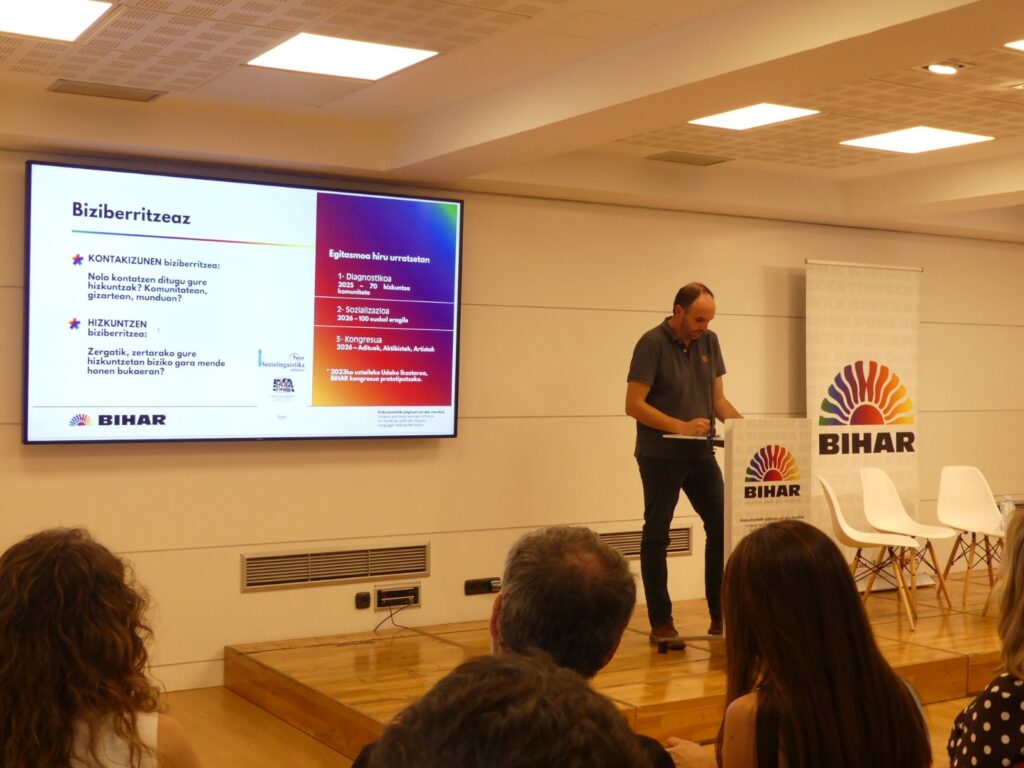
The first presentation at the conference was given by Xan Aire, a member of Plazara, who outlined the background and rationale behind the conference.
He explained that the idea for the Bihar conference had first taken shape during the summer course held in July 2023. He emphasised that, when classifying speakers, various variables must be taken into account, highlighting the importance of intersectionality.
Xan stressed that, to breathe new life into our narratives, we have a story to tell: “Symbolism, yes, but perhaps we should bring more pragmatism to our narrative. Our languages are studied as philological treasures – we won’t deny that – but we should link them to sociolinguistics. In the face of individualism, we need community; in the face of globalisation, we need transgression; and in the face of screens we need the public square too.”
The need for new narratives
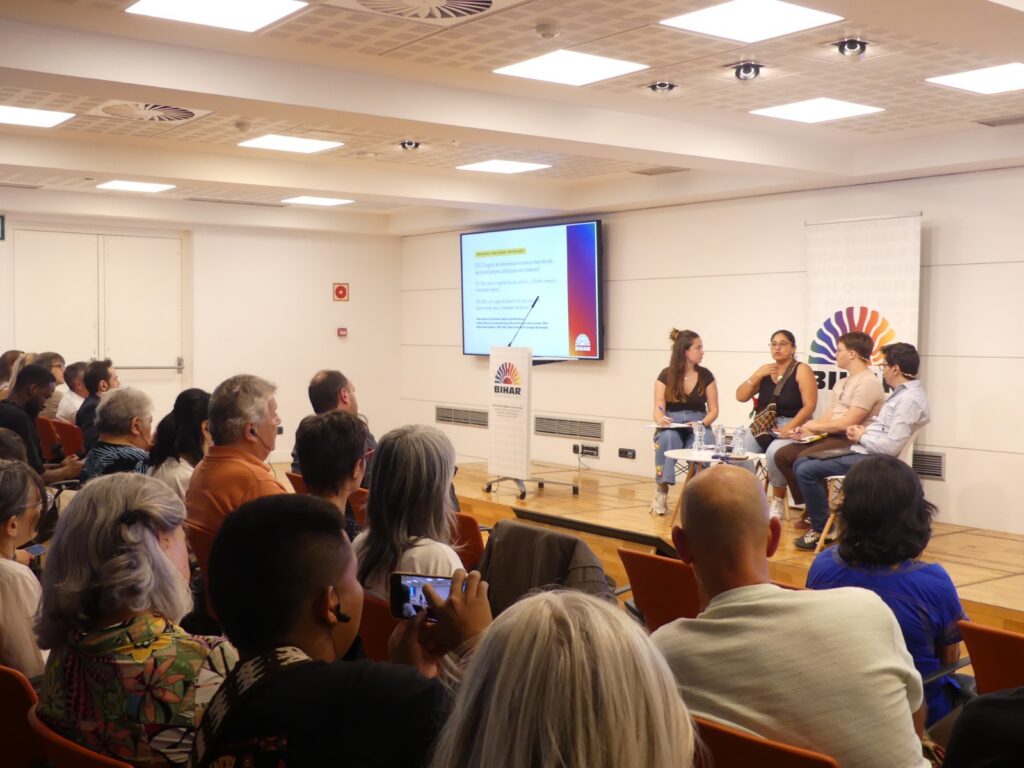
Next, under the chairmanship of Irati Amondarain from Garabide, three speakers discussed the need to seek out new narratives: Miriam Viviana González, an expert in language revitalisation within the Nasa community; Albert Badosa, an activist with the Higa association and a lecturer in Catalan in Belgrade; and Andichi Chahid, an Amazigh writer and journalist.
Irati asked them what factors were currently influencing language revitalisation. Andichi Chahid replied that the future of the Amazigh language would depend on economic dynamism. “Villages where Amazigh is spoken have remained linked to large urban centres, and in the cities, Arabic is spoken. Current development runs against revitalisation; it is a threat to the language.” As for social media, he emphasised that Amazigh is mainly used orally and very little in writing, with the consequences that this entails.
Albert Badosa emphasised that victimisation has no place in our narratives. “We need to be modern and open our doors to attract new speakers. Offer work, the chance to integrate into the community… To combat individualism, it is important to preserve our identity and share it with others – of course without giving up social media, but by trying not to rely on it too much.”
Miriam Viviana emphasised that mobilisation is important, but that “we must reach the authorities and put the language issue on the political agenda. In our case, this has been essential for engaging and motivating the community”.
Today’s session concluded with two artistic performances by the Mixe community and the Basque Country respectively. Delfina Libia Reyes Chávez performed a song from the Ayöök community. And the bertsolari Maialen Lujanbio was tasked with bringing the session to a splendid close.